By Ethiopian BeansJan 10, 202612 min read
The Ethiopian Coffee Ceremony: A Complete Guide
Key Takeaway
The Ethiopian coffee ceremony (buna tetu) is a daily ritual involving the roasting, grinding, and brewing of coffee in a clay jebena pot. It includes three rounds of serving (abol, tona, baraka) and typically lasts 60 to 90 minutes. More than a method of preparation, it is the social backbone of Ethiopian community life, practiced multiple times per day in homes across the country.
What Is the Ethiopian Coffee Ceremony?
The Ethiopian coffee ceremony is the country's most recognized cultural practice. In Amharic, the phrase buna tetu literally means "drink coffee," but it carries a far deeper meaning. To be invited to a coffee ceremony is to be welcomed into a person's home, trust, and conversation. Refusing the invitation is considered impolite.
Most Ethiopian households perform the ceremony two to three times daily: morning, midday, and evening. It is not reserved for special occasions. Neighbours drop in, family gathers, and the day's events are discussed over three rounds of freshly brewed coffee. In a country where over 12 million people are involved in coffee cultivation, the ceremony connects producers and consumers at the most personal level.
The Amharic expression buna dabo naw translates to "coffee is our bread." It reflects how central coffee is to daily sustenance and social fabric. No other country treats coffee with this level of ritual attention.
Origins of the Ceremony
Ethiopia is the birthplace of Arabica coffee. The most widely told origin story centres on Kaldi, a goat herder from the Kaffa region, who noticed his goats becoming unusually energetic after eating red berries from a wild shrub. Curious, Kaldi tried the berries himself and experienced the same stimulating effect.
He brought the berries to a nearby monastery, where the monks initially dismissed them as "the Devil's work" and threw them into a fire. The aroma of the roasting beans changed their minds. They retrieved the beans, crushed them, dissolved them in hot water, and found that the drink helped them stay alert during long hours of prayer. The practice of roasting and brewing coffee spread across Ethiopia and, by the 13th century, to the wider Islamic world.
Historians believe the Kaldi legend reflects events around 850 AD, though coffee was likely chewed as a stimulant (mixed with ghee or animal fat) for centuries before it was brewed as a drink. The word "coffee" itself may derive from "Kaffa bunn," meaning "coffee from Kaffa" in the local language. The ceremony as practised today preserves elements of this original preparation, passed from generation to generation without interruption.
Equipment Used in the Ethiopian Coffee Ceremony
Every piece of equipment in the ceremony has a specific name and purpose. Understanding these items helps you appreciate the precision behind what may appear to be a simple process.
| Item | Amharic Name | Purpose |
|---|---|---|
| Roasting pan | Menkeshkesh | Flat iron pan used to roast green coffee beans over hot coals or an open flame |
| Mortar | Mukecha | Heavy wooden or stone bowl for grinding the roasted beans |
| Pestle | Zenezena | Long wooden stick used to crush the beans inside the mukecha |
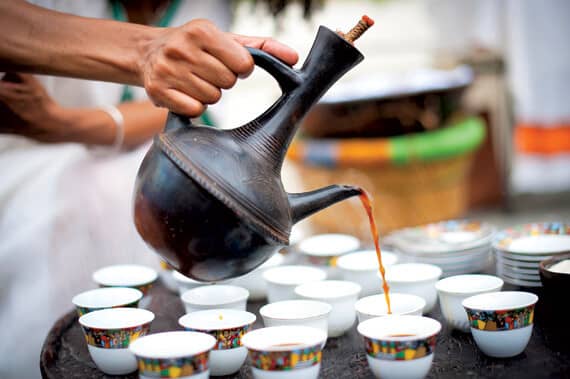
| Brewing pot | Jebena | Round-bodied clay pot with a narrow neck and spout, used to brew and pour the coffee |
| Cups | Sini | Small handleless ceramic cups, similar in size to espresso cups |
| Cup tray | Rekebot | A tray (often wooden or woven) used to carry and present the sini to guests |
Some households also use a masheda (a woven grass mat) to set the serving area, and burn frankincense or etan (myrrh) on small charcoal burners alongside the coffee. The incense is both aromatic and symbolic, signifying a blessing over the gathering.
The Steps of the Ethiopian Coffee Ceremony
Preparing the Space
The host scatters fresh cut grass and sometimes small yellow flowers on the floor where guests will sit. This practice is common across Ethiopian ethnic groups and signals that a gathering is taking place. Frankincense is lit, filling the room with a sweet, resinous smoke. During the Orthodox holiday of Meskel, composite flowers may replace the typical yellow blossoms.
Roasting the Beans
Green coffee beans are washed and then placed on the menkeshkesh over hot coals. The host shakes and turns the beans by hand until they reach a dark brown colour and begin to release oils. This process takes roughly 5 to 10 minutes. Once roasted, the pan is carried around the room so each guest can lean in and inhale the fragrant smoke. This moment, when the aroma fills the space, is one of the ceremony's most anticipated steps.
Grinding
The roasted beans are transferred to the mukecha and ground by hand with the zenezena. The rhythmic sound of pestle against mortar is a signature part of the experience. The grind is typically fine, similar to what you would use for Turkish coffee or espresso. In some regions, a modern hand grinder may be used, but many households prefer the traditional method.
Brewing in the Jebena
The ground coffee is added to boiling water inside the jebena, which sits on a small charcoal stove or open flame. The coffee brews for several minutes as the clay pot absorbs and radiates heat evenly. The jebena's narrow neck acts as a natural filter, holding back most of the grounds when the coffee is poured. The host pours from a height of about one foot into each sini in a single, continuous stream, a skill that takes practice to master.
The Three Rounds
The same grounds are brewed three times, with each round carrying its own name and character:
- Abol (አቦል): The first and strongest round. Rich, full-bodied, and aromatic. This is the most prized cup.
- Tona (ቶና): The second round, lighter than abol but still flavourful. Water is added to the same grounds and brewed again.
- Baraka (በረካ): The third and final round, the mildest of the three. The word "baraka" means "blessing." Completing all three rounds is considered respectful and brings good fortune.
Coffee is typically served with sugar, though some regions prefer salt or a sprig of rue (tena adam). Popcorn, roasted barley, or himbasha (a lightly sweet bread) are common accompaniments. These traditional snacks are some of the oldest coffee pairings in the world. For more ideas on matching Ethiopian coffee with food, see our food pairing guide.
The Cultural Meaning of the Ethiopian Coffee Ceremony
Hospitality and Connection
The ceremony is an act of hospitality. It is where news is shared, disputes are resolved, and relationships are maintained. In rural communities, it serves as the primary social forum. In cities like Addis Ababa, the ceremony persists even as the pace of life accelerates. Coffee shops throughout Ethiopia still perform abbreviated versions for customers.
An Ethiopian proverb captures this role: "If someone says, 'I don't have anyone to have coffee with,' it means they have no close friends." Coffee and community are inseparable.
The Role of the Host
The ceremony is traditionally performed by the woman of the household. It is viewed as an honour, not a chore. The host controls every step: selecting the beans, managing the roast, grinding, brewing, and pouring. Skilled hosts are recognized and respected. In some communities, a young woman performs her first ceremony as a rite of passage.
Coffee Sayings and Proverbs
Coffee is embedded in the Amharic language itself. Beyond buna dabo naw ("coffee is our bread") and buna tetu ("drink coffee"), there is a saying: "Don't let your name get noticed at coffee time." It warns against behaving in ways that invite gossip, since the ceremony is where reputations are discussed. These expressions reveal coffee's role as both social glue and moral compass.
Regional Variations
While the core ceremony follows the same pattern across Ethiopia, regional differences exist:
- Kaffa region: Some families add a spoonful of clarified butter (ghee) to brewed coffee, producing a richer, more calorie-dense drink. This practice dates back centuries and parallels Tibetan butter tea. Ground coffee mixed with ghee was also rolled into balls and consumed as a portable energy source during long journeys.
- Harar region: Salt is preferred over sugar. Harar's coffee culture is among the oldest in Ethiopia, and the region's natural-processed beans produce a distinctive wild, fruity flavour when brewed in a jebena.
- Sidamo and Guji regions: Fresh herbs such as rue (tena adam) are often added to the brew. Some families also serve the coffee with a side of kollo (roasted grain), reflecting the agricultural rhythms of these highland communities.
For details on how each region's beans differ in flavour, see our guide on how to buy Ethiopian coffee, which compares all five major growing zones.
How to Experience the Ethiopian Coffee Ceremony Today
You do not need to travel to Ethiopia to participate in this tradition. Ethiopian restaurants and cultural centres in cities like Toronto, Vancouver, Washington D.C., and London regularly perform full ceremonies for guests. If you visit Ethiopia, any invitation into a home will almost certainly include one.
To recreate a simplified version at home, you need a jebena (available from Ethiopian specialty shops or online), fresh green or roasted Ethiopian coffee beans, small cups, and a heat source. The essential ingredients are patience and company. Rushing defeats the purpose. If you prefer modern methods, our guide to brewing Ethiopian coffee at home covers pour over, AeroPress, French press, and cold brew with step-by-step instructions.
Start with high-quality single-origin beans. Yirgacheffe coffees are a natural choice for their floral, citrus-forward character, while Harar beans offer the bold, fruity profile that many Ethiopians prefer for ceremonial brewing. The Wikipedia article on the Ethiopian coffee ceremony provides additional historical context if you want to read further.
Taste the Coffee Behind the Ceremony
Our single-origin Ethiopian beans come from the same highlands where this tradition began. Every bag is traceable from farm to cup.
Browse our Origins, request samples, or place your first order today.
Related Articles
Coffee Origins
About This Insight: Written by Ethiopian Beans, a Canadian coffee company sourcing at origin in Ethiopia through Ethio Coffee Export. Information reflects conditions at the time of publication. For current pricing, availability, and sourcing details, please contact us.