By Ethiopian BeansJan 19, 202610 min read
Ethiopian Coffee Food Pairing: A Practical Guide
Key Takeaway
Ethiopian coffee's natural flavour notes (floral, citrus, berry, stone fruit, chocolate) make it one of the most food-friendly coffees in the world. Match the coffee's dominant flavour to a complementary or contrasting food. Yirgacheffe pairs brilliantly with lemon desserts and soft cheese. Guji loves dark chocolate and berry pastries. Harar stands up to bold spiced dishes and aged cheese. This guide maps each major Ethiopian region to specific foods so you can create pairings that work every time.
A cup of Ethiopian coffee already delivers more complexity than most single-origin coffees on the market. Floral aromatics, bright fruit acidity, chocolate undertones, wine-like body. These are not subtle flavours hiding in the background. They are front and centre, and they interact with food in interesting ways.
The problem is that most people drink their coffee with whatever happens to be on the plate. That is fine for commodity blends where everything tastes more or less the same. But when you are drinking a carefully roasted Yirgacheffe or a naturally processed Guji, the food you eat alongside it can either enhance those signature notes or flatten them entirely.
This guide breaks down food pairing by Ethiopian coffee region, meal type, and brewing method. No theory without application. Every suggestion here is something you can try at your next breakfast or afternoon coffee break.
Why Ethiopian Coffee Pairs So Well with Food
Most commercial coffee blends sit in a narrow flavour band: roasty, bitter, vaguely nutty. Pairing food with that profile is straightforward but unexciting. You pick something sweet to balance the bitterness and move on.
Ethiopian coffees operate differently. Because Ethiopia is the birthplace of Arabica coffee, its genetic diversity produces an unusually wide flavour spectrum. A washed Yirgacheffe tastes nothing like a natural Harar, even though both are Ethiopian Arabica. This diversity gives you more dimensions to work with when pairing.
Three characteristics make Ethiopian coffee especially good with food:
- Bright acidity. Ethiopian coffees tend to have lively, clean acidity (citrus, malic, or wine-like). Acidity in coffee works like acidity in wine or a squeeze of lemon on food. It cuts through richness, cleanses the palate, and refreshes your taste buds between bites.
- Distinct fruit and floral notes. These are not vague descriptors. A well-roasted Ethiopian coffee can genuinely taste of blueberry, jasmine, lemon zest, or peach. These natural flavours create bridges to foods with similar or complementary profiles.
- Lower bitterness. Light to medium roasted Ethiopian coffees are significantly less bitter than dark-roasted blends. Less bitterness means the coffee will not overpower delicate foods like pastries, soft cheese, or fruit.
Ethiopian Coffee Flavour Profiles by Region
Before you pair anything, it helps to know what flavour profile you are working with. Flavour varies not just by region but also by processing method (washed vs natural). Here is a quick reference for the major Ethiopian coffee regions. For a deeper look, see our buyer's guide to Ethiopian coffee.
| Region | Key Flavour Notes | Body | Best Pairing Categories |
|---|---|---|---|
| Yirgacheffe | Jasmine, lemon, bergamot, tea-like | Light | Citrus desserts, soft cheese, light pastries |
| Sidamo | Peach, apricot, honey, mild cocoa | Medium | Stone fruit dishes, honey pastries, oatmeal |
| Guji | Blueberry, dark chocolate, wine | Medium-Full | Dark chocolate, berry tarts, aged cheese |
| Harar | Wild berry, mocha, spice, earthy | Full | Spiced baking, dark chocolate, rich breakfast |
| Limu | Mild citrus, honey, balanced sweetness | Medium | Granola, nut pastries, milk chocolate |
Use this table as a starting point. The general principle: lighter-bodied coffees pair with lighter foods, fuller-bodied coffees stand up to richer ones. But the real fun is in the specific matches below.
Breakfast Pairings
Breakfast is the most natural pairing opportunity. You are already drinking coffee. The question is whether your food and coffee are helping or fighting each other.
Light and Fruity Coffees (Yirgacheffe, Sidamo)
These coffees have bright acidity and delicate floral or fruit notes. Heavy, greasy breakfasts will drown them. Lean into lighter fare that mirrors or complements their brightness.
- Lemon ricotta pancakes or crepes. The citrus in the food echoes the lemon and bergamot notes in the coffee. The ricotta adds creaminess without heaviness.
- Greek yoghurt with honey and fresh berries. The tangy yoghurt matches the coffee's acidity. Honey bridges to the sweet floral notes. Berries add a fruit layer that amplifies what is already in the cup.
- Croissants or butter pastries. The buttery richness provides contrast to the coffee's acidity. A classic combination for a reason. Plain croissants work best here; chocolate or almond versions compete too much with the coffee's own flavours.
- Oatmeal with sliced peach or apricot. Especially good with Sidamo, whose stone fruit notes will mirror the toppings. A pinch of cinnamon adds warmth without overpowering the coffee.
Bold and Berry-Forward Coffees (Guji, Harar)
These coffees have more body and intensity. They can handle richer breakfast foods without disappearing.
- Sourdough toast with avocado and a fried egg. The earthiness of the sourdough and the fat from avocado and egg provide a canvas for Harar's wild berry and spice notes to cut through.
- Blueberry muffins or scones. A natural match for Guji's blueberry notes. The baked sweetness rounds out the coffee's wine-like acidity.
- Banana bread. The dense, caramelized sweetness pairs well with Harar's mocha and earthy character. Walnuts in the bread add a nutty dimension that complements the fuller body.
- Granola with dark chocolate shavings. Works with either Guji or Harar. The chocolate brings out cocoa notes in the coffee, while the granola adds a crunchy textural contrast.
Dessert and Pastry Pairings
Afternoon coffee with dessert is where Ethiopian coffee pairing really shines. The coffees' natural sweetness and fruit character overlap with dessert flavours in ways that darker roasts cannot match.
Chocolate
Not all chocolate works equally well with all Ethiopian coffee. The key is matching intensity.
- Dark chocolate (70% and above) with Guji or Harar. These coffees already have chocolate undertones. The dark chocolate amplifies them while adding bitterness that the coffee's fruit notes balance. This is probably the single most reliable Ethiopian coffee pairing.
- Milk chocolate with Limu or Sidamo. The lighter cocoa in milk chocolate complements the mild sweetness and honey notes in these coffees without overpowering them.
- White chocolate with Yirgacheffe. An unconventional choice, but the creamy sweetness of white chocolate provides a smooth counterpoint to Yirgacheffe's bright acidity and floral notes.
Fruit-Based Desserts
- Lemon tart or lemon bars with Yirgacheffe. The citrus in the dessert resonates with the coffee's lemon and bergamot notes. The tart's buttery crust adds richness.
- Berry crumble or berry tart with Guji. Guji's blueberry and dark fruit profile lines up directly with berry desserts. A scoop of vanilla ice cream on top bridges the coffee's sweetness to the dessert.
- Peach cobbler with Sidamo. Stone fruit meets stone fruit. The baked warmth of the cobbler adds depth that complements Sidamo's balanced body.
Baked Goods
- Almond biscotti. Works across all Ethiopian regions. The dry crunch is designed for dipping, and the toasted almond flavour adds nuttiness without competing with the coffee's fruit or floral character.
- Cinnamon rolls with Harar. Harar's spice notes (think clove, cardamom) harmonize with the cinnamon and sugar glaze. The coffee's body stands up to the sweetness.
- Honey cake or baklava with Sidamo. The honey sweetness in both the food and the coffee creates a unified flavour experience. The flaky pastry adds textural interest.
Cheese and Savoury Pairings
Coffee and cheese is less intuitive than coffee and sweets, but it works surprisingly well when you treat it like wine and cheese pairing. The same principles apply: match the intensity, and use acidity to cut fat.
- Fresh chevre (goat cheese) with Yirgacheffe. The tanginess of the cheese mirrors the coffee's citric acidity. Spread it on a cracker with a drizzle of honey for a simple, elegant pairing.
- Brie or Camembert with Sidamo. The creamy, mild flavour of these cheeses provides a neutral canvas for Sidamo's peach and apricot notes. Serve at room temperature for the best result.
- Aged cheddar or Gruyere with Guji or Harar. The nutty, caramelized flavours in aged cheese complement the dark fruit and chocolate notes in these coffees. The cheese's saltiness enhances the perception of sweetness in the cup.
- Blue cheese with Harar. A bold choice for bold palates. The pungent, salty character of blue cheese plays off Harar's earthiness and wild berry notes, creating a complex, layered tasting experience.
Ethiopian Food and Ethiopian Coffee
There is an obvious pairing that rarely gets discussed in detail: Ethiopian food with Ethiopian coffee. In Ethiopia, coffee and food are deeply connected but served at different moments. The coffee ceremony traditionally happens after meals, not during. Still, certain Ethiopian dishes work beautifully alongside or between cups of coffee.
Between-Cup Snacks from the Ceremony
During the traditional Ethiopian coffee ceremony, small snacks are offered between the three rounds of coffee. These pairings have been refined over centuries.
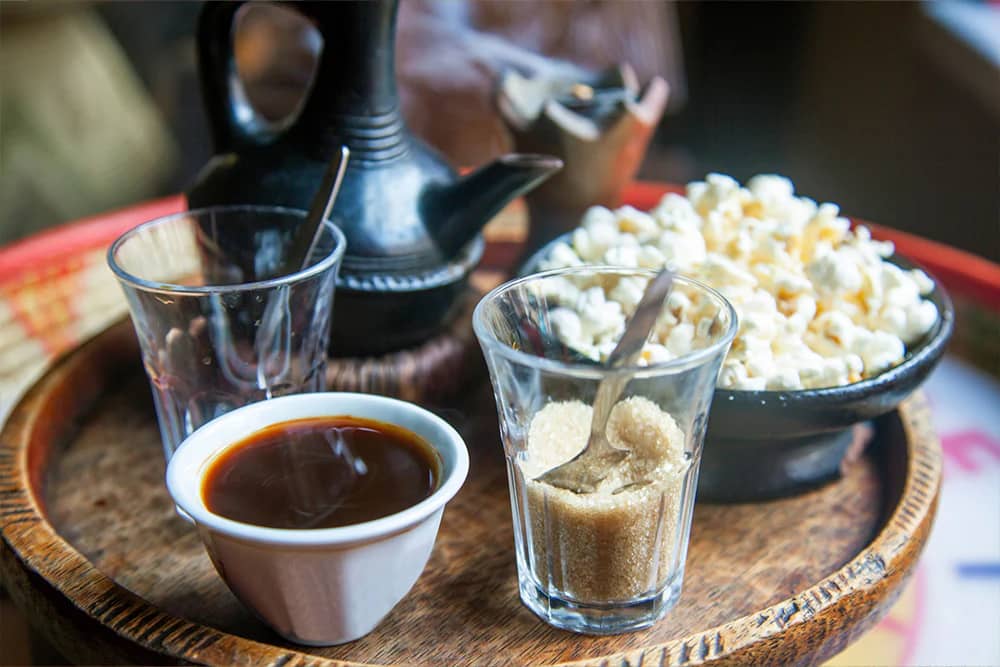
- Popcorn (fandisha). The most traditional coffee accompaniment. Freshly popped, lightly salted popcorn provides a neutral, crunchy contrast that cleanses the palate between sips. It works with every Ethiopian coffee region.
- Kolo (roasted barley). Toasted, chewy, and slightly nutty. Kolo adds a grain-forward flavour that grounds the coffee's fruit and floral notes. Often made with a touch of salt and sometimes mixed with peanuts.
- Himbasha (celebration bread). A lightly sweetened, cardamom-spiced bread. The warm spice notes echo what you find in Harar coffee, and the bread's mild sweetness works with any Ethiopian origin.
Everyday Ethiopian-Inspired Pairing Ideas
You do not need a full Ethiopian spread to bring these flavours together. Here are practical, everyday options:
- Injera chips with berbere-spiced dip. If you can find injera at a local Ethiopian restaurant or grocery store, tear it into pieces and toast them in the oven. Pair with a mild berbere dip. The spice complexity of berbere (chili, fenugreek, coriander) creates a layered experience with Harar or Guji.
- Honey and nigella seed crackers. Nigella seeds (common in Ethiopian cooking) have a slightly peppery, onion-like flavour. Combined with honey on a simple cracker, they create a sweet-savoury bite that works beautifully with Sidamo or Limu.
Pairing by Brewing Method
How you brew your Ethiopian coffee changes its body, acidity, and intensity, which affects what foods work alongside it. Here is a quick guide.
| Brewing Method | What It Emphasizes | Best Food Pairings |
|---|---|---|
| Pour Over (V60, Chemex) | Clarity, acidity, floral and fruit notes | Light pastries, citrus desserts, fresh fruit, soft cheese |
| AeroPress | Balanced body and acidity, concentrated flavour | Chocolate, nut-based baked goods, yoghurt |
| French Press | Fuller body, reduced acidity, richer mouthfeel | Banana bread, aged cheese, butter pastries |
| Cold Brew | Smoothness, natural sweetness, low acidity | Chocolate brownies, vanilla desserts, fruit salad |
If you are making a pour over with a Yirgacheffe and eating a lemon tart, you are stacking all the flavour dimensions in the same direction: bright, citrus, clean. If you brew the same coffee in a French press and pair it with aged cheddar, you are moving toward contrast: body and richness against fruit acidity. Both approaches work. The key is being intentional.
Three Rules for Better Coffee Pairings
You do not need to memorize a chart. These three principles cover most situations:
- Match the weight. Light-bodied coffee with light food. Full-bodied coffee with richer food. A delicate Yirgacheffe pour over will vanish next to a heavy chocolate cake. Pair it with a lemon tart instead. Save the chocolate cake for a French press Guji or Harar.
- Echo or contrast one flavour. If your coffee has blueberry notes, you can either echo that with a berry pastry (harmony pairing) or contrast it with something salty or nutty (contrast pairing). Both create interest. Echoing emphasizes the shared flavour. Contrasting makes both the food and the coffee taste more distinct.
- Taste the coffee first. Always sip the coffee before you eat. Notice what flavour stands out. Then take a bite of the food and sip again. If the coffee tastes better, richer, or more complex after the food, the pairing works. If the coffee tastes flat or the food aftertaste clashes, try a different combination.
These rules apply to any coffee, but the depth of flavour in Ethiopian coffee gives you far more to work with than most origins. A Colombian coffee might have two or three pairing options. A well-sourced Ethiopian coffee might have a dozen.
Quick-Reference Pairing Cheat Sheet
| If Your Coffee Is... | Reach For | Avoid |
|---|---|---|
| Floral and citrusy (Yirgacheffe) | Lemon desserts, soft cheese, plain croissant, fresh berries | Heavy chocolate, spicy food, smoked meat |
| Stone fruit and honey (Sidamo, Limu) | Peach cobbler, honey cake, oatmeal, Brie | Strongly sour foods, very dark chocolate |
| Berry and chocolate (Guji) | Dark chocolate, berry tarts, blueberry muffins, aged cheddar | Delicate floral desserts, plain white bread |
| Bold and spicy (Harar) | Cinnamon rolls, banana bread, blue cheese, spiced pastries | Light citrus flavours, simple sugar cookies |
Find Your Perfect Pairing
Browse our selection of single-origin Ethiopian coffees from Yirgacheffe, Sidamo, Guji, Harar, and Limu. Each bag lists the origin region, processing method, and tasting notes to help you pick the beans that match your favourite foods.
Related Articles
Coffee Origins
About This Insight: Written by Ethiopian Beans, a Canadian coffee company sourcing at origin in Ethiopia through Ethio Coffee Export. Pairing suggestions are based on flavour profile analysis and traditional Ethiopian food culture. Individual taste preferences vary. For current product availability and details, please contact us.