By Ethiopian BeansFeb 17, 202611 min read
Ethiopian Coffee Varieties Explained
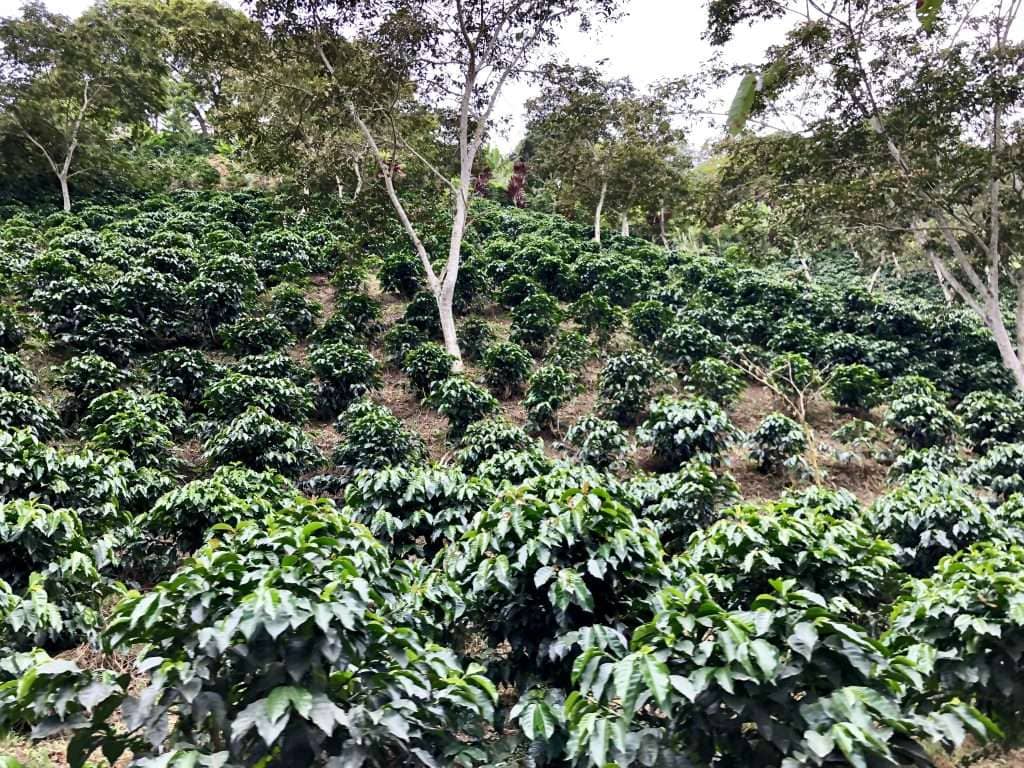
Key Takeaway
Ethiopian coffee labelled "heirloom" contains a mix of indigenous landrace varieties – not one named cultivar. Ethiopia holds an estimated 10,000 to 15,000 distinct coffee genotypes, making it the most genetically diverse coffee origin on earth. Named selections from JARC (Jimma Agricultural Research Center) like 74110 and 74112 exist but remain rare in specialty lots. Understanding these Ethiopian coffee varieties helps you read labels, appreciate regional differences, and know why Ethiopian coffee tastes unlike anything else.
Pick up a bag of Ethiopian single-origin coffee in Canada and you will almost certainly see the word "heirloom" where the variety should be. On Kenyan bags you find SL28 or SL34. On Colombian bags you see Caturra or Castillo. Ethiopian coffee gets a single, umbrella term that covers thousands of genetically distinct plants.
That is not a labelling shortcut. It reflects a biological reality unlike any other coffee-producing country. Ethiopian coffee varieties evolved naturally across highland forests for hundreds of thousands of years, creating a genetic wealth that the rest of the coffee world cannot match. This guide explains what that means for the beans you buy, the flavours you taste, and the terms you see on a label.
What "Ethiopian Heirloom" Actually Means
The term Ethiopian heirloom coffee is industry shorthand for indigenous, naturally occurring coffee varieties native to Ethiopia. When a roaster prints "Heirloom" on the bag, they are essentially saying: this coffee comes from genetically diverse landrace varieties that have not been individually identified or DNA-tested.
In agriculture, "heirloom" usually refers to old, open-pollinated varieties preserved unchanged for generations – think heirloom tomatoes. Ethiopian coffee varieties are not preserved unchanged. They continue to cross-pollinate, mutate, and evolve naturally. A more precise term would be "landrace" or "indigenous varieties," but "Ethiopian Heirloom" has become the industry standard that buyers and roasters worldwide recognise.
The label acknowledges three things at once: indigenous origin (these plants evolved in Ethiopia over millennia), uncharacterised diversity (the specific genetics have not been fully catalogued), and mixed populations (most farms grow multiple genetically distinct varieties side by side in the same plot). For a broader introduction to these beans, see our beginner's guide to Ethiopian coffee.
Landrace vs Cultivar: A Quick Primer
To understand Ethiopian varieties, you need the distinction between landraces and cultivars. Most coffee grown outside Ethiopia comes from cultivars – varieties deliberately selected, bred, and propagated by humans for specific traits. Bourbon, Caturra, SL28, and Gesha (when grown in Panama or Colombia) are cultivars. They are genetically uniform, formally named, clonally or seed-reproduced in controlled lines, and stable from plant to plant.
Ethiopian coffee is overwhelmingly landrace. Landraces evolved naturally over thousands of years, are genetically heterogeneous (diverse within a single population), adapted to specific local environments through natural selection, and propagated through traditional farmer seed-saving rather than formal breeding programmes. They contain multiple genetic variations, are continuously evolving, and are not formally named or registered.
This is not a weakness. It is Ethiopia's defining strength. The genetic variability within a single Ethiopian lot creates layered, complex flavours that single-cultivar lots from other origins rarely achieve. When you taste floral, berry, citrus, and chocolate notes in the same cup, you are tasting multiple genetic expressions working together.
Ethiopia's Genetic Diversity by the Numbers
Ethiopia is the centre of origin for Coffea arabica. Coffee evolved here over hundreds of thousands of years, and Ethiopia remains the only place on earth where wild Arabica populations still grow in natural forest ecosystems.
The numbers are staggering. Ethiopia is home to an estimated 10,000 to 15,000 distinct coffee genotypes. By comparison, the rest of the world's coffee-growing regions combined cultivate fewer than 100 named varieties commercially. This imbalance traces back to a historical bottleneck: a small number of Ethiopian coffee seeds were taken to Yemen between the 15th and 17th centuries, then carried to India, Java, and eventually the Americas. The entire global coffee industry descends from a tiny fraction of Ethiopian genetic diversity.
The two founding populations – Typica (introduced to the Americas via Java) and Bourbon (introduced to Réunion Island) – represent an extremely narrow genetic base. Modern breeding programmes have returned to Ethiopia to collect diverse germplasm for disease resistance, climate adaptation, and quality improvement. Ethiopia is not just coffee's past. It is the genetic reservoir for coffee's future.
How Region Shapes Variety
While we cannot name individual Ethiopian varieties with precision, we can observe that heirloom populations vary significantly by region. Centuries of natural selection and farmer seed-saving have created distinct regional genetic profiles, and those profiles translate directly into flavour. For a full region-by-region breakdown, see our Ethiopian coffee regions compared guide.
| Region | Altitude | Genetic Character | Typical Flavour |
|---|---|---|---|
| Yirgacheffe | 1,750–2,200 m | Smaller bean, dense, high-altitude adapted | Jasmine, bergamot, lemon citrus, tea-like body |
| Guji | 1,800–2,350 m | High diversity, wild forest influence, volcanic soil | Stone fruit, tropical notes, wine-like complexity |
| Sidamo | 1,550–2,200 m | Slightly larger bean, vigorous growth | Berry sweetness, balanced acidity, chocolate undertones |
| Harar | 1,400–2,000 m | Longberry and shortberry types, drought-tolerant | Wild blueberry, wine acidity, heavy body, spice |
| Limu | 1,400–2,100 m | Forest and garden coffee, balanced genetics | Warm spice, rounded body, approachable balance |
When you buy Ethiopian coffee in Canada, the region name on the bag is the most reliable proxy for variety. A washed Yirgacheffe and a natural Harar come from genetically distinct populations, grown at different altitudes, in different soils, under different climates. The result is two fundamentally different coffees – as different as a Riesling and a Merlot.
JARC Selections: Ethiopia's Named Varieties
Ethiopia does have officially named and registered coffee varieties, developed by the Jimma Agricultural Research Center (JARC), part of the Ethiopian Institute of Agricultural Research. Starting in the 1970s, JARC began systematic breeding and selection work: researchers identified promising individual trees from wild and cultivated Ethiopian coffee populations, evaluated them for yield, disease resistance, cup quality, and regional adaptation, then released them as named varieties.
Notable JARC selections include 74110 and 74112 (released in the 1970s, known for good yield and cup quality), 74140, 74148, and 74158 (released in the 1980s–1990s, emphasising disease resistance), and 74165 (a more recent selection with Coffee Berry Disease resistance). Regionally named varieties like Ababuna, Dessu, and Gawe were selected for specific agro-ecological zones.
Despite their official status, JARC varieties represent a small fraction of Ethiopian coffee production. Many farmers prefer their traditional landrace varieties. Government seedling distribution reaches only a portion of coffee farmers. Even farmers who receive JARC seedlings often plant them alongside existing varieties, and coffee from different varieties is processed together at washing stations. Some specialty buyers and farmers also believe traditional heirloom varieties produce more complex cup profiles than JARC selections.
If an Ethiopian coffee bag specifically lists a JARC variety number (like 74110), it indicates intentional variety selection and potentially more uniform genetics. However, the vast majority of specialty Ethiopian coffee available in Canada comes from traditional heirloom populations. For more on how quality is classified, see our Ethiopian coffee grades explained guide.
Gesha – Ethiopia's Most Famous Variety
No discussion of Ethiopian coffee varieties is complete without Gesha (also spelled Geisha), arguably the most famous and expensive coffee variety in the world. The story begins in the 1930s when coffee seeds were collected from forests near Gesha village in southwestern Ethiopia's Bench Maji zone, initially for their resistance to Coffee Leaf Rust.
Those seeds travelled to research stations in Tanzania and Kenya in the 1950s, then to CATIE in Costa Rica in 1963. In the 1990s, a Panamanian farmer obtained seeds from CATIE and planted them at high altitude. In 2004, Hacienda La Esmeralda's Gesha won the Best of Panama competition with an unprecedented 94.1 cupping score and sold for a then-record US$21 per pound. Gesha became a global phenomenon, now grown across Central America, South America, and Asia, with competition lots regularly selling for hundreds of dollars per pound.
The irony is that Gesha originated in Ethiopia, yet almost all commercial Gesha coffee is grown elsewhere. Ethiopian farmers have not traditionally isolated and propagated individual varieties, and coffee from the Gesha village area is processed in mixed lots alongside other local varieties. Some Ethiopian exporters now market coffee as "Gesha Village" or "Ethiopian Gesha," but without DNA verification, confirming the specific variety is difficult. Gesha is one of Ethiopia's thousands of indigenous landraces – extraordinary, but far from the only treasure in the gene pool.
What Variety Terms Mean on a Canadian Coffee Label
When shopping for Ethiopian coffee at a Canadian roaster or online at ethiopianbeans.ca, here is what variety terms actually indicate:
| Label Term | What It Means | Reliability |
|---|---|---|
| Ethiopian Heirloom | Indigenous landrace varieties, not individually identified | ✓ Accurate standard term |
| Mixed Heirloom | Explicitly acknowledges multiple varieties in the lot | ✓ Honest descriptor |
| 74110, 74112, etc. | Specific JARC-developed variety selection | ✓ Accurate if verified |
| Gesha / Geisha | Variety from Gesha village; famous worldwide | △ Rarely DNA-verified in Ethiopian lots |
| Bourbon / Typica | Cultivars that descended from Ethiopian genetics but were selected elsewhere | ✗ Rarely accurate on Ethiopian bags |
Be cautious if an Ethiopian coffee bag lists "Bourbon" or "Typica" without further explanation. True Bourbon and Typica are varieties that left Ethiopia centuries ago and were selected in other countries. Unless the seller can provide DNA verification or detailed provenance, such claims are likely approximations based on plant appearance rather than genetic confirmation. On the other hand, when you see "Ethiopian Heirloom," that is not vague – it is the most honest term available for coffee from the world's most genetically complex origin.
Why This Matters for Your Cup
Ethiopian heirloom varieties' genetic diversity translates directly into the flavour complexity that makes Ethiopian coffee famous. Different genetic lines within a single lot contribute different compounds: one variety might produce pronounced floral terpenes (jasmine, bergamot), another adds berry-forward fruit esters, a third provides bright citric acidity, and yet another contributes body and chocolate depth.
The result is what cuppers call "layered complexity" – multiple distinct flavour notes unfolding across the sip. This is the signature of Ethiopian coffee and the reason it consistently scores among the highest in the world on the SCA cupping scale. For a detailed look at the flavour notes you can expect, see our Ethiopian coffee tasting notes guide.
The practical takeaway for Canadian coffee buyers: do not chase variety names when shopping for Ethiopian coffee. They rarely exist in meaningful detail. Instead, focus on region (your best flavour indicator), processing method (washed vs natural), and grade (quality level). These three pieces of information tell you far more about what is in your cup than any variety label ever could.
Frequently Asked Questions
What does "Ethiopian heirloom" mean on a coffee label?
"Ethiopian heirloom" refers to indigenous landrace coffee varieties that have grown naturally in Ethiopia for centuries. It is not one named cultivar but a catch-all term for thousands of genetically diverse local varieties from a specific region. Most Ethiopian coffee sold in Canada uses this label because the individual genetics have not been catalogued or DNA-tested.
How many coffee varieties exist in Ethiopia?
Ethiopia is home to an estimated 10,000 to 15,000 distinct coffee genotypes – far more than any other country. Most remain uncharacterised and are grouped under the "heirloom" label. By comparison, the rest of the world's coffee industry works with fewer than 100 commonly cultivated varieties.
What is the difference between heirloom and single-variety coffee?
Single-variety coffee from countries like Colombia or Kenya comes from one identified cultivar such as Caturra or SL28. Ethiopian heirloom lots typically contain a mix of indigenous landraces grown together in the same area. This is not a quality issue – it is the nature of Ethiopian coffee and contributes to its signature layered complexity. Regional terroir and processing method are more reliable flavour indicators than variety names.
Where did Gesha (Geisha) coffee originate?
Gesha coffee originated in the forests near the town of Gesha in southwestern Ethiopia's Bench Maji zone. Seeds were collected in the 1930s and eventually planted in Panama, where the variety gained worldwide fame for its exceptional floral and jasmine-like cup profile after winning the Best of Panama competition in 2004. Gesha is one of Ethiopia's many indigenous landraces.
Why does Ethiopian coffee genetic diversity matter?
Ethiopia's wild and cultivated coffee populations contain genetic traits – disease resistance, drought tolerance, climate adaptation, and unique flavour compounds – that breeders worldwide need to develop resilient new varieties. As climate change threatens global coffee production, Ethiopia's genetic resources are essential for the long-term survival of Arabica coffee. For consumers, this diversity is the reason Ethiopian coffee offers a range of flavour profiles unmatched by any other single origin.
Taste Ethiopian Heirloom Varieties, Shipped Fresh Across Canada
Every bag at ethiopianbeans.ca is sourced directly through our family export company, Ethio Coffee Export, in Ethiopia. Explore heirloom lots from Yirgacheffe, Guji, Sidamo, Harar, and Limu – each region expressing its own unique genetic character in the cup.
Related Articles
Regions and Origins
Quality and Buying
Processing and Preparation
About This Insight: Written by Ethiopian Beans, a Canadian coffee company sourcing exclusively through our family export company Ethio Coffee Export in Ethiopia. Variety information in this article is based on current industry knowledge and published research. Genetic characterisation of Ethiopian coffee is an evolving field. For questions about specific lots or variety details, please contact us.