By Ethiopian BeansFeb 15, 202612 min read
Ethiopian Coffee Regions Compared
Key Takeaway
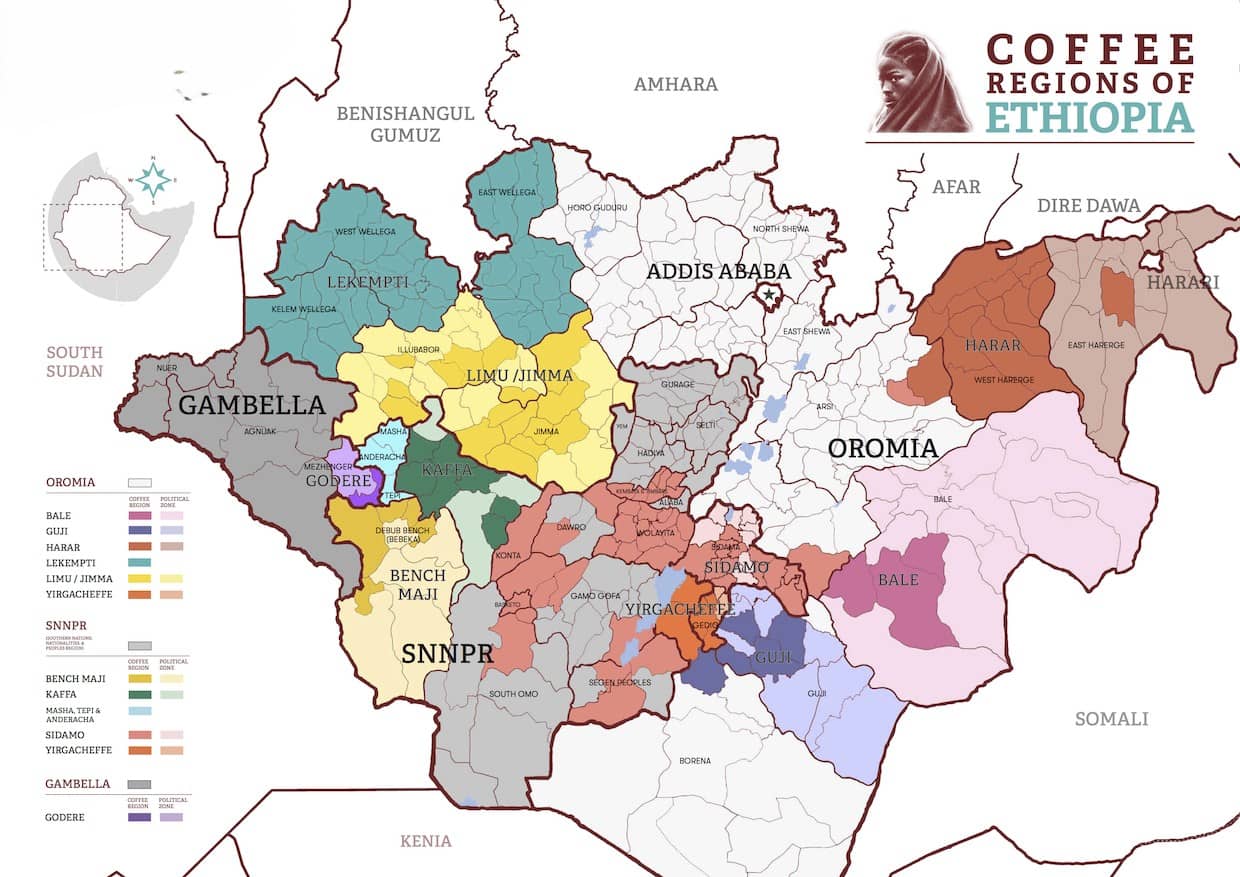
Ethiopia has five major Ethiopian coffee regions: Yirgacheffe, Guji, Sidamo, Harar, and Limu. Each produces coffee with a distinct flavour profile shaped by altitude, soil composition, rainfall, and processing tradition. Yirgacheffe is floral and citrus-forward. Guji delivers tropical fruit intensity. Sidamo balances berry sweetness with wine-like acidity. Harar offers bold mocha and blueberry character. Limu brings warm spice and approachable balance. Knowing the regions helps you choose the right beans for your brewing method and palate.
Every bag of Ethiopian single-origin coffee comes from a specific growing region, and that region determines most of what you taste in the cup. Ethiopian coffee regions are not just geographic labels. They represent unique combinations of altitude, microclimate, soil chemistry, heirloom varieties, and generations of processing knowledge that produce measurably different coffees.
For Canadian buyers choosing between bags online, the region name is the single most useful piece of information on the label. A washed Yirgacheffe and a natural Harar are as different as a Riesling and a Merlot. Understanding those differences saves you from buying beans that do not match your taste, your brew method, or how you drink your coffee at home. These regional distinctions also matter when comparing Ethiopian coffee to other origins; see our Ethiopian vs Guatemalan coffee comparison for a direct matchup.
This guide compares all five regions sold at ethiopianbeans.ca: Yirgacheffe, Guji, Sidamo, Harar, and Limu. You will find flavour profiles, altitude ranges, typical processing methods, recommended brewing approaches, and a side-by-side table to make your decision simple.
Why Ethiopian Coffee Regions Matter
Ethiopia is the birthplace of Arabica coffee and home to thousands of indigenous coffee varieties that do not exist anywhere else on earth. Unlike countries where coffee was introduced and planted in uniform rows, Ethiopian coffee evolved naturally across wildly different terrains. The southern highlands around Yirgacheffe sit at different altitudes, receive different rainfall, and contain different soil minerals than the eastern plateaus around Harar.
These environmental differences translate directly into flavour. Coffee grown above 2,000 metres develops more slowly, producing denser beans with higher sugar and acid content. Volcanic soil in Guji contributes mineral complexity. The drier climate in Harar means nearly all coffee there is naturally processed, creating a fundamentally different flavour profile than washed coffees from Yirgacheffe. For a deeper look at how growing conditions shape the bean, see our Ethiopian coffee history guide.
The Ethiopian Commodity Exchange (ECX) classifies and grades coffee by region, ensuring that beans from each zone are evaluated and marketed under their regional identity. This system protects the integrity of regional names like Yirgacheffe and Harar, which Ethiopia has trademarked internationally.
The Five Ethiopian Coffee Regions
Yirgacheffe: The Global Benchmark
Yirgacheffe is the most recognised Ethiopian coffee region in the world and the standard by which many specialty buyers judge African coffees. Located in the Gedeo Zone of the Southern Nations region, Yirgacheffe sits at 1,700 to 2,200 metres above sea level with consistent rainfall and deep, fertile soil.
Washed Yirgacheffe is the classic profile: jasmine florals, bergamot, bright lemon and lime citrus, and a tea-like body that feels clean and delicate. Natural Yirgacheffe shifts toward berry sweetness, tropical fruit, and a slightly fuller mouthfeel while keeping that signature floral complexity. Cup scores for quality lots typically range from 84 to 88+ on the SCA scale.
Best for: Pour over, AeroPress, and anyone who loves bright, aromatic coffee with refined acidity. Start here if you enjoy tea-like clarity in your morning cup.
Guji: Tropical Fruit Intensity
Guji has become one of the most exciting regions in specialty coffee over the past decade. Part of the broader Oromia region in southern Ethiopia, Guji grows coffee at altitudes from 1,800 to 2,300 metres on nutrient-rich volcanic soil under indigenous forest canopy.
Natural Guji is a flavour powerhouse. Expect ripe blueberry, mango, peach, and passion fruit with a syrupy body and sweet, lingering finish. Washed Guji is more restrained but still complex, with stone fruit, florals, and a crisp citrus acidity. Many Guji lots score 87 to 89+ on the SCA scale, placing them among the world's highest-rated coffees. Guji micro-lots regularly appear in Cup of Excellence competitions.
Best for: Pour over, cold brew, and anyone who wants bold, fruit-forward flavour. Natural Guji makes stunning cold brew with berry-juice sweetness.
Sidamo: Berry Balance and Wine-Like Depth
Sidamo (also written Sidama) is one of Ethiopia's largest and most diverse coffee-growing zones. Technically, the broader Sidama zone encompasses Yirgacheffe and parts of Guji, but coffee marketed as "Sidamo" typically comes from the wider area outside those sub-regions. Altitudes range from 1,500 to 2,200 metres, producing a wide spectrum of flavour profiles.
The signature Sidamo cup features complex berry notes (strawberry, raspberry, blueberry), wine-like acidity, and a richer body than Yirgacheffe. Washed Sidamo leans toward citrus brightness and floral aromatics. Natural Sidamo delivers intense berry sweetness with dark chocolate undertones. The balance between fruit, acidity, and body makes Sidamo one of the most versatile Ethiopian coffees for different brewing methods.
Best for: Espresso, French press, and drip. Natural Sidamo pulls particularly well as a single-origin espresso with thick crema and berry sweetness.
Harar: The Original Mocha
Harar is one of the oldest coffee-growing regions in the world and the birthplace of the term "mocha." Located in the eastern Ethiopian highlands at 1,500 to 2,100 metres, Harar receives less rainfall than the southern regions, and virtually all coffee here is dry-processed (natural). The beans are hand-sorted by local farmers who have refined this craft over centuries.
Harar coffee is unmistakable. Wild blueberry, dark chocolate, warm spice, and a pronounced wine-like body define the cup. The acidity is lower and rounder than Yirgacheffe or Guji, and the overall impression is rich, warming, and deeply satisfying. Harar beans come in two main classifications: longberry (larger beans, more complex flavour) and shortberry (smaller, bolder, earthier). According to historical records, Harar has been continuously cultivated for coffee since at least the 16th century. Harar's "mocha" character is the closest Ethiopian parallel to Yemeni coffee; see how the two origins compare in our Ethiopian vs Yemeni coffee comparison.
Best for: French press, espresso blends, and anyone who enjoys bold, chocolatey coffee. Harar is ideal for cold Canadian mornings when you want a warming, full-bodied cup. Also see our food pairing guide for Harar and dark chocolate combinations.
Limu: The Underrated All-Rounder
Limu is the region that specialty coffee insiders appreciate but most Canadian consumers have never tried. Grown in the southwestern highlands of the Jimma and Illubabor zones at 1,400 to 2,100 metres, Limu coffee benefits from abundant rainfall and rich forest soil.
The flavour profile is balanced and approachable: wine-toned acidity, brown sugar sweetness, warm spice (cinnamon, cardamom), and a smooth, medium body. Limu lacks the dramatic fruit-bomb character of Guji or the intense florals of Yirgacheffe, but it delivers a deeply satisfying, well-rounded cup that works across every brewing method. Limu is predominantly washed, producing clean, consistent lots with reliable quality.
Best for: Drip, pour over, espresso blends, and everyday drinking. Limu offers exceptional value; you get genuine Ethiopian specialty coffee character at a lower price point than Yirgacheffe or Guji. If you are new to Ethiopian coffee, our beginner's guide recommends Limu as an accessible starting point.
Ethiopian Coffee Regions: Side-by-Side Comparison
The following table summarises the key characteristics of each region. Use it as a quick reference when shopping for Ethiopian single-origin beans.
| Region | Altitude | Key Flavours | Body | Acidity | Processing |
|---|---|---|---|---|---|
| Yirgacheffe | 1,700 – 2,200 m | Jasmine, bergamot, lemon, tea-like | Light to medium | Bright, citric | Washed & Natural |
| Guji | 1,800 – 2,300 m | Blueberry, mango, peach, passion fruit | Medium to full | Vibrant, fruity | Washed & Natural |
| Sidamo | 1,500 – 2,200 m | Strawberry, raspberry, wine, dark chocolate | Medium to full | Wine-like, complex | Washed & Natural |
| Harar | 1,500 – 2,100 m | Wild blueberry, dark chocolate, spice, wine | Full | Low to moderate | Natural only |
| Limu | 1,400 – 2,100 m | Brown sugar, wine, cinnamon, cardamom | Medium | Moderate, wine-toned | Mostly washed |
How to Choose Your Ethiopian Coffee Region
Selecting the right region comes down to three factors: your flavour preferences, your brewing method, and what role coffee plays in your daily routine.
Choose by Flavour Preference
- You love bright, floral, tea-like coffee: Start with washed Yirgacheffe. It is the lightest, most aromatic Ethiopian profile.
- You crave intense fruit and sweetness: Natural Guji delivers the most dramatic fruit character of any Ethiopian region.
- You want balanced fruit with deeper body: Sidamo sits at the middle of the spectrum, rich enough for espresso yet complex enough for pour over.
- You prefer bold, chocolatey, warming cups: Harar is the answer. Full body, low acidity, classic mocha character.
- You want a smooth, everyday Ethiopian coffee: Limu is approachable, versatile, and excellent value.
Choose by Brewing Method
Different regions pair better with different brew methods because body, acidity, and flavour intensity interact with extraction in distinct ways. For detailed brewing parameters, see our complete brewing guide and grind size guide.
| Brew Method | Best Regions | Why |
|---|---|---|
| Pour Over | Yirgacheffe, Guji | Clean extraction highlights florals and fruit clarity |
| AeroPress | Yirgacheffe, Sidamo | Versatile pressure and timing draw out aromatic complexity |
| Espresso | Sidamo, Harar, Guji | Fuller body and bold flavour survive high-pressure extraction |
| French Press | Harar, Sidamo, Limu | Immersion brewing amplifies body and chocolate/spice notes |
| Cold Brew | Guji, Yirgacheffe | Slow extraction pulls sweet fruit notes with minimal bitterness |
| Drip / Batch Brew | Limu, Sidamo | Balanced profiles translate well to larger brew volumes |
Processing Methods Across Ethiopian Coffee Regions
Processing is the second biggest variable after region. The same beans processed differently will taste noticeably different. Ethiopia uses two main processing methods: washed (wet) and natural (dry). A few producers are also experimenting with honey processing and anaerobic fermentation, though these remain uncommon.
Yirgacheffe, Guji, and Sidamo produce both washed and natural coffees, giving you a choice of flavour style within the same region. Harar is exclusively natural, which is why its flavour profile is so distinctive. Limu is predominantly washed. For a detailed comparison of how processing shapes flavour, read our washed vs natural Ethiopian coffee guide.
As a general rule: washed coffees from any region will be cleaner, brighter, and more acidic. Natural coffees will be fruitier, sweeter, and fuller-bodied. If you are unsure which processing style you prefer, try one of each from the same region. A washed Yirgacheffe next to a natural Yirgacheffe demonstrates the difference clearly.
What Altitude Tells You About Flavour
All five Ethiopian regions grow coffee at altitudes that qualify as "Strictly High Grown" (SHG), the international designation for coffee cultivated above 1,200 metres. However, the range within Ethiopia is significant: from 1,400 metres in lower Limu zones to 2,300 metres in the highest Guji sites.
Higher altitude generally means brighter acidity, more complex flavour, and denser beans. This is because cooler temperatures slow the cherry's maturation, allowing more time for sugars and organic acids to develop. Guji's extreme altitudes are one reason its coffees score so highly in competitions. Conversely, Limu's slightly lower growing zones produce a rounder, gentler acidity that some drinkers prefer.
When shopping, altitude listed on the bag gives you a useful preview. Beans from 1,900 metres and above will typically deliver more acidity and complexity. Beans from 1,500 to 1,800 metres tend toward a smoother, more balanced cup. Neither is better; they suit different preferences. Our tasting notes guide can help you decode these flavour signals.
Buying Ethiopian Coffee by Region in Canada
At ethiopianbeans.ca, every bag is labelled with the specific growing region, processing method, altitude, grade, and tasting notes. This transparency comes from our direct relationship with our family export company, Ethio Coffee Export, in Ethiopia. We know exactly which washing stations processed the beans and which lots passed quality control. If you want to interpret those bag details more confidently before you buy, our Ethiopian coffee label guide for Canada walks through the order that matters most.
According to the Coffee Association of Canada, 71% of Canadians drink coffee daily, and a growing number are choosing specialty single-origin beans over commercial blends. The shift toward home brewing means more Canadians are learning to taste regional differences for the first time.
All orders ship domestically within Canada, so freshness is not compromised by international transit times. Whether you are in Toronto, Vancouver, Calgary, or Halifax, your beans arrive quickly and at peak quality. For details on shipping, returns, and order sizes, visit our ordering information page.
Roast Levels and Regional Character
The roast level you choose interacts with the regional flavour profile in important ways. Lighter roasts preserve acidity and origin character; darker roasts emphasise body and caramelisation.
- Yirgacheffe and Guji: Light to medium roast. These regions have delicate, aromatic compounds that darker roasts can mask.
- Sidamo: Medium roast. Balances the berry sweetness with caramel development without losing the wine-like acidity.
- Harar: Medium to medium-dark roast. Brings out the chocolate and spice while preserving the signature blueberry note.
- Limu: Medium roast. The warm spice and brown sugar notes respond well to a balanced roast. Limu also takes a slightly darker roast well for espresso blending.
Frequently Asked Questions
What are the main Ethiopian coffee regions?
The five primary regions are Yirgacheffe, Guji, Sidamo, Harar, and Limu. Each has a distinct flavour profile shaped by altitude, soil, climate, and processing methods. Yirgacheffe is the most widely known, while Guji has gained strong specialty recognition in recent years.
Which Ethiopian coffee region has the best flavour?
There is no single "best" region; it depends on your taste. Yirgacheffe suits those who love bright florals. Guji appeals to fruit-forward drinkers. Harar is best for bold, chocolatey preferences. Sidamo offers balanced versatility, and Limu is ideal for smooth, everyday cups.
Is Guji coffee the same as Sidamo?
Guji was historically grouped under the broader Sidama zone, but it is now classified as a separate region. Guji coffee is grown at higher altitudes on volcanic soil and produces more intense tropical fruit notes than typical Sidamo lots. The ECX grades them as distinct origins.
What is the difference between Yirgacheffe and Sidamo?
Yirgacheffe is technically within the Sidama zone but is classified separately due to its distinctive lighter, more floral profile. Broader Sidamo coffees tend toward heavier body, more pronounced berry notes, and wine-like acidity, while Yirgacheffe is tea-like and citrus-forward.
Which Ethiopian coffee region is best for espresso?
Sidamo and Harar work best as single-origin espresso due to their fuller body and flavour intensity. Natural Sidamo produces thick crema and berry sweetness. Harar adds chocolate depth. Guji naturals also pull excellent espresso shots with bold fruit character.
Specialty Ethiopian Coffee, Shipped Fresh Across Canada
Every bag at ethiopianbeans.ca is sourced directly through our family export company, Ethio Coffee Export, in Ethiopia. You get full traceability from region to cup, fast domestic shipping anywhere in Canada, and the freshest Ethiopian beans available.
Related Articles
Quality and Varieties
Buying and Pricing
Brewing and Preparation
About This Insight: Written by Ethiopian Beans, a Canadian coffee company sourcing exclusively through our family export company Ethio Coffee Export in Ethiopia. Regional flavour profiles described in this article are based on specialty-grade lots and may vary by harvest year and processing method. For current product availability and regional selections, please contact us.