By Ethiopian BeansFeb 13, 202610 min read
Ethiopian Coffee Grades Explained
Key Takeaway
Ethiopian coffee is graded from 1 (highest quality) to 5 (lowest) based on defect count and cup quality. Grade 1 beans contain fewer than 3 defects per 300 g sample and score 85 or above on standardised cupping evaluations. Grade 2 is the most common specialty-quality grade available in Canada. Understanding these grades helps you choose beans that match your taste expectations, your preferred brewing method, and your budget.
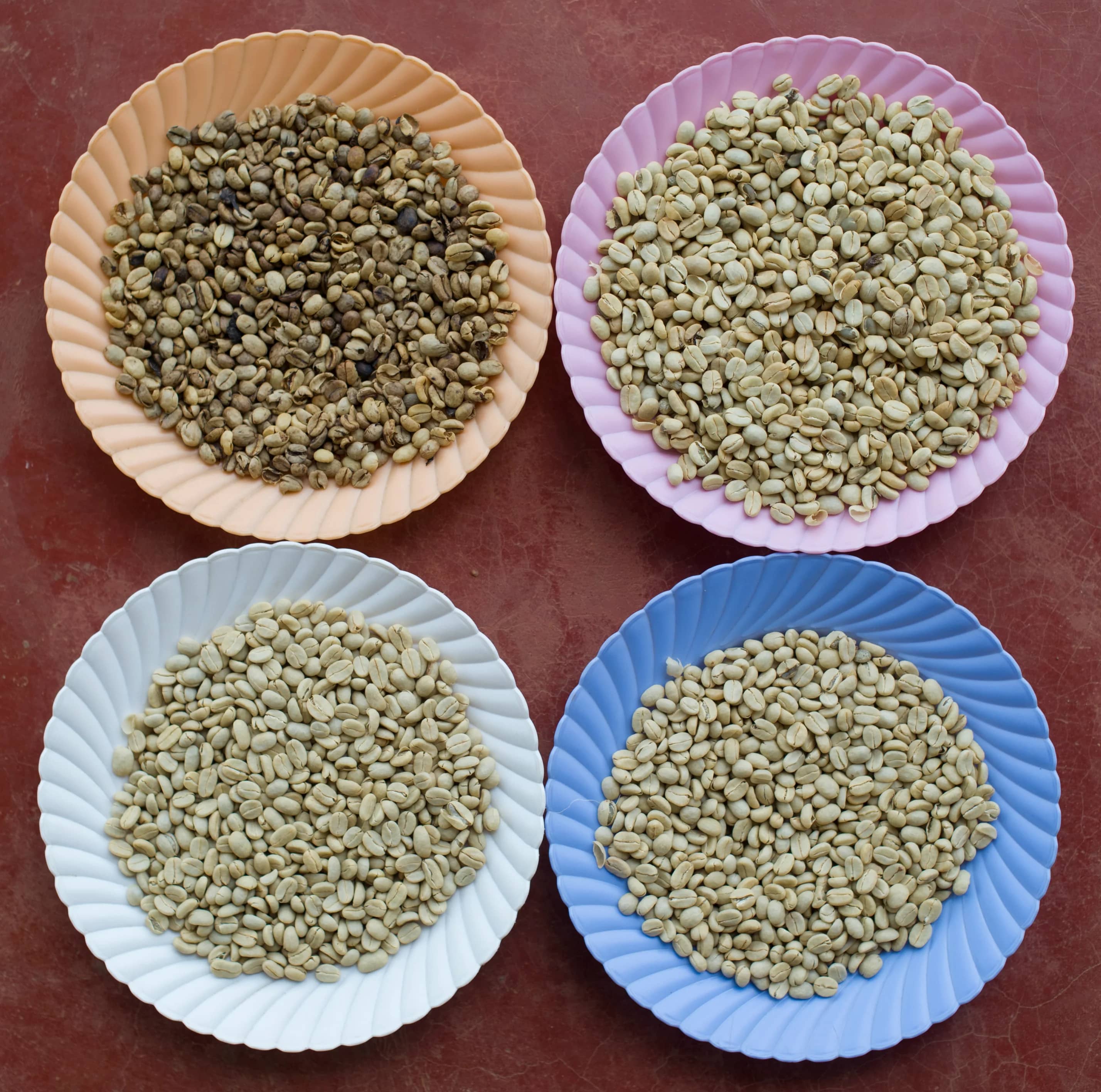
Ethiopian coffee grades tell you exactly what is inside the bag before you open it. Every lot of Ethiopian coffee is evaluated, sorted, and assigned a number from 1 (best) to 5 (lowest) before it leaves the country. The grade reflects two measurable qualities: the physical condition of the green beans and the flavour quality determined by professional cuppers.
For Canadian buyers shopping online, the grade cuts through vague marketing language. A label that says "premium" or "artisan" tells you nothing specific. A label that says "Grade 1 washed Yirgacheffe" tells you the beans passed strict quality control at the Ethiopian Commodity Exchange, contain almost zero physical defects, and scored highly in blind tasting. That is the kind of information that helps you make a confident purchase.
This guide explains the Ethiopian coffee grading system from start to finish: how grading works, what each grade means, how processing and region affect the score, and what grade you should look for based on how you brew at home.
How Ethiopian Coffee Is Graded
Ethiopian coffee grading happens in two stages. First, trained inspectors evaluate the physical characteristics of the green (unroasted) beans. Second, certified cuppers taste brewed samples to assess flavour quality. Both scores combine to determine the final grade. The Ethiopian Commodity Exchange (ECX) oversees this process for the majority of export lots.
Physical Grading: Defect Count
Inspectors take a 300 g sample of green beans and count every physical defect. Defects fall into two categories:
- Primary (Category 1) defects: full black beans, full sour beans, large stones, large sticks, and foreign matter. A single primary defect can disqualify a lot from specialty status.
- Secondary (Category 2) defects: partial black beans, partial sour beans, shells, broken beans, insect damage, and under-ripe beans. These are less severe individually, but they accumulate.
The total defect count per 300 g sample determines the physical grade. Fewer defects mean a higher grade. This process is aligned with criteria from the Specialty Coffee Association (SCA), which sets the global standard for specialty green coffee evaluation.
Sensory Grading: Cup Score
Cup quality is evaluated through a standardised process called cupping. Certified tasters roast a small batch, grind it, steep it in hot water, and taste the resulting brew. They score the coffee across multiple attributes: aroma, flavour clarity, acidity, body, balance, sweetness, aftertaste, and overall impression.
The SCA cupping protocol uses a 100-point scale. A score of 80 or above qualifies the coffee as "specialty grade." Scores between 85 and 89 are considered "excellent," and anything above 90 is "outstanding." Most Grade 1 Ethiopian coffees score between 85 and 92. Grade 2 lots typically score between 80 and 84.
Cupping adds a critical layer that physical inspection alone cannot capture. A lot might have very few visible defects but produce a flat, unremarkable cup. Conversely, a lot with a few minor physical flaws might deliver extraordinary flavour. The combined system ensures that both bean condition and taste quality shape the final grade.
Ethiopian Coffee Grades: 1 Through 5
The following table summarises the five Ethiopian coffee grades, their defect thresholds, and how they are typically used.
| Grade | Defects per 300 g | Cup Score | Typical Use |
|---|---|---|---|
| Grade 1 | 0 to 3 | 85+ | Specialty single-origin, micro-lots, competition lots |
| Grade 2 | 4 to 12 | 80 to 84 | Specialty retail, high-quality single-origin |
| Grade 3 | 13 to 25 | Below 80 | Commercial grade, commodity blends |
| Grade 4 | 26 to 45 | Below 80 | Lower commercial, institutional supply |
| Grade 5 | 46 to 90 | Below 80 | Lowest export quality, domestic market |
Grade 1: The Highest Standard
Grade 1 Ethiopian coffee represents the top tier of the country's production. With no more than 3 defects per 300 g and cupping scores of 85 or above, these lots are almost flawless: uniform in size, consistent in colour, and free from broken or discoloured beans.
In the cup, Grade 1 coffees deliver the full flavour profile their region is known for. A Grade 1 washed Yirgacheffe will show clearly defined jasmine, bergamot, and lemon notes. A Grade 1 natural Guji will present intense blueberry and tropical fruit with a clean finish. The clarity is what separates Grade 1 from lower grades; every flavour note is distinct and well-resolved.
Grade 1 lots are less common and carry a price premium. They make up a small percentage of Ethiopia's total export volume, which is one reason Ethiopian coffee costs more than most other origins.
Grade 2: The Specialty Sweet Spot
Grade 2 is where most Canadian consumers find the best balance between quality and value. With 4 to 12 defects per 300 g and cupping scores between 80 and 84, Grade 2 beans qualify as specialty coffee under SCA standards. The regional character is clearly present: you will taste the citrus of a Sidamo, the chocolate of a Harar, or the florals of a Yirgacheffe. The differences between Grade 1 and Grade 2 are subtle and often require a trained palate to detect in a home-brewed cup.
Most specialty Ethiopian coffee sold by Canadian roasters and online retailers is Grade 2. It offers excellent cup quality at a price point that makes daily drinking realistic. If you are new to Ethiopian coffee, Grade 2 is the best starting point. Our beginner's guide covers which regions and brewing methods to try first.
Grade 3: Commercial Quality
Grade 3 marks the boundary between specialty and commercial coffee. These lots have 13 to 25 defects per 300 g and score below 80 in cupping. The regional character may be present but less defined, often muted by off-flavours from the higher defect count.
You will rarely find Grade 3 Ethiopian coffee sold as single-origin in Canada. It typically ends up in commercial blends at grocery stores, mixed with beans from other countries. A bag labelled "Ethiopian blend" without a specified grade may contain Grade 3 beans.
Grades 4 and 5: Below Specialty
Grades 4 and 5 are the lowest quality levels in the Ethiopian export system. These lots contain numerous defects and produce cups that lack the complexity and clarity Ethiopian coffee is known for. Most Grade 4 and 5 coffee is consumed domestically within Ethiopia or used in instant coffee production. Canadian specialty retailers do not stock these grades.
How Processing Affects Ethiopian Coffee Grades
Ethiopia uses two primary processing methods, and each one has its own grading track within the ECX system. Washed (wet processed) and natural (dry processed) coffees are evaluated separately because the processing method fundamentally changes the bean's physical appearance and flavour characteristics.
Washed coffees tend to grade higher on physical inspection because the washing process removes the fruit layer cleanly, producing more uniform beans. Natural coffees, where the cherry dries intact around the bean, sometimes show more physical variation (uneven colour, occasional stickiness) even when the cup quality is outstanding.
This is important context for buyers. A Grade 2 natural Guji might taste more complex and interesting than a Grade 1 washed coffee from a different region, despite its lower number. Processing method and region matter as much as the grade number on its own. For a detailed explanation of how processing shapes flavour, see our washed vs natural Ethiopian coffee guide.
What Ethiopian Coffee Grades Mean for Canadian Buyers
According to the Coffee Association of Canada, 71% of Canadians drink coffee daily, and a growing number are choosing specialty single-origin beans over commercial blends. If you are among them, understanding grades gives you a practical advantage when shopping online.
How to Read an Ethiopian Coffee Label
A well-labelled bag of Ethiopian coffee should include the following information:
- Region: Yirgacheffe, Guji, Sidamo, Harar, Limu, or another named growing area.
- Grade: Grade 1 or Grade 2 for specialty coffee.
- Variety: Usually listed as "Ethiopian Heirloom" – learn what that really means in our Ethiopian coffee varieties guide.
- Processing method: Washed or Natural.
- Altitude: Typically 1,500 to 2,200 metres for high-quality lots.
- Tasting notes: Specific flavour descriptors from professional cupping.
Bags that omit the grade entirely often contain Grade 3 or lower beans. Reputable specialty roasters and importers always include this information. At ethiopianbeans.ca, every bag lists the grade, region, processing method, altitude, and documented tasting notes.
Grade and Price
Higher grades cost more because they require more selective picking, more careful processing, and more rigorous sorting. In Canada, a 340 g bag of Grade 1 Ethiopian coffee typically costs $22 to $30 CAD. Grade 2 ranges from $18 to $25. The per-cup cost when brewed at home works out to roughly $0.60 to $0.95, still far less than a single café pour over in Toronto or Vancouver.
The real question is whether the grade you are buying delivers value for the price. A Grade 2 Sidamo at $20 offers exceptional quality for daily drinking. A Grade 1 micro-lot at $28 is worth it when you want a special weekend pour over. For a full price breakdown, see our guide to Ethiopian coffee pricing.
Which Grade Should You Buy?
Your ideal grade depends on how you brew and what you prioritise.
- Pour over or AeroPress: Grade 1 shines here. These methods highlight clarity and complexity, which is exactly what Grade 1 delivers. If you enjoy identifying individual tasting notes, this is the grade for you.
- Espresso: Grade 1 or Grade 2 both work well. The concentrated extraction of espresso amplifies flavour, so even Grade 2 beans produce a vibrant, complex shot. See our espresso guide for dialling in Ethiopian beans.
- French press or cold brew: Grade 2 is an excellent choice. Full-immersion brewing is more forgiving and produces a rounded cup where the difference between Grade 1 and Grade 2 is less noticeable.
- Daily drinking on a budget: Grade 2 offers the best balance of specialty quality and accessible pricing for cold February mornings and bright summer afternoons alike.
Ethiopian Coffee Grades by Region
Each growing region produces coffees across multiple grades, but certain regions are known for consistently high-scoring lots.
Produces a high proportion of Grade 1 and Grade 2 washed lots. Altitude: 1,700 to 2,200 metres. Typical notes: jasmine, bergamot, lemon, peach. Yirgacheffe consistently ranks among the highest-scoring Ethiopian coffees in international cupping.
Exceptional natural and washed lots, frequently grading at Grade 1 and Grade 2. Altitude: 1,800 to 2,200 metres. Typical notes: blueberry, tropical fruit, dark chocolate, wine. Natural processed Guji lots have gained a strong reputation among specialty roasters worldwide.
One of Ethiopia's largest and most diverse producing areas. Grade range varies widely by specific woreda (district). Altitude: 1,500 to 2,200 metres. The best Sidamo lots grade at 1 or 2, with citrus, berry, and stone fruit character.
Exclusively natural processed. Harar coffees are graded separately due to their distinctive flavour profile. Grade 1 and 2 Harar lots show wild berry, wine, and dark chocolate notes. The dry processing tradition in Harar predates modern grading systems by centuries.
Washed Limu coffees at Grade 2 offer rounded acidity, wine-like undertones, and spicy-floral notes. Altitude: 1,400 to 2,000 metres. Less well-known internationally but highly regarded among Ethiopian coffee professionals for its consistency.
For help choosing a region based on your flavour preferences, see our buyer's guide to Ethiopian coffee.
Frequently Asked Questions
What is Grade 1 Ethiopian coffee?
Grade 1 is the highest quality Ethiopian coffee. It contains no more than 3 defects per 300 g sample, scores 85 or above in professional cupping, and shows zero Category 1 (primary) defects. Grade 1 lots represent a small percentage of total Ethiopian exports and carry a price premium.
Is Grade 2 Ethiopian coffee good?
Yes. Grade 2 Ethiopian coffee qualifies as specialty grade under SCA standards, with a cupping score of 80 or above. Most specialty Ethiopian coffee sold in Canada is Grade 2. The flavour difference between Grade 1 and Grade 2 is subtle and often undetectable in home brewing.
How is Ethiopian coffee graded?
Ethiopian coffee is graded through two evaluations: a physical defect count (inspecting green bean samples of 300 g for broken, discoloured, or foreign matter) and a sensory cupping score (tasting brewed samples for flavour, acidity, body, and balance). The combined result determines the grade from 1 to 5.
What is the difference between Grade 1 and Grade 2 Ethiopian coffee?
Grade 1 allows 0 to 3 defects per 300 g and typically scores 85 or above in cupping. Grade 2 allows 4 to 12 defects and scores 80 to 84. Both are specialty quality. Grade 1 offers slightly more clarity and definition in the cup, while Grade 2 provides excellent quality at a lower price point.
What grade of Ethiopian coffee should I buy in Canada?
For most home brewing methods, Grade 2 is the best balance of quality and value. Choose Grade 1 if you brew pour over or AeroPress and want maximum flavour clarity, or if you are buying coffee as a gift. Both grades are available from Canadian specialty retailers with fast domestic shipping.
Conclusion: Grades Are Your Quality Shortcut
Ethiopian coffee grades give you a reliable, standardised way to assess quality before you buy. Grade 1 and Grade 2 both deliver specialty-level flavour. Grade 1 offers peak clarity and complexity for discerning palates and slower brew methods. Grade 2 provides outstanding value for daily drinking across all methods.
The grade number is most useful when combined with region, processing method, and altitude. A label reading "Grade 2 washed Yirgacheffe, 1,900 m" tells you far more than any marketing adjective. Look for this level of detail when shopping. If it is missing, ask the roaster.
At ethiopianbeans.ca, every lot we sell is sourced through our family export company, Ethio Coffee Export, in Ethiopia. We know the grade, the region, the washing station, and the processing method for every bag we ship across Canada. That traceability is part of what you pay for, and part of what makes the coffee worth drinking.
Specialty Ethiopian Coffee, Shipped Fresh Across Canada
Every bag we sell comes directly from Ethiopian farms through our family export company, Ethio Coffee Export. You get full traceability, verified grades, and the authentic flavour of coffee from its birthplace.
Grade 1 and Grade 2 lots, shipped fresh to your door.
Related Articles
Quality and Varieties
Buying and Pricing
Brewing and Preparation
About This Insight: Written by Ethiopian Beans, a Canadian coffee company sourcing exclusively through our family export company Ethio Coffee Export in Ethiopia. Grading criteria referenced in this article are based on ECX standards and SCA protocols. For current product availability, grades, and sourcing details, please contact us.