By Ethiopian BeansFeb 7, 202611 min read
Ethiopian Coffee Grind Size: A Complete Guide
Key Takeaway
Ethiopian coffee grind size should match your brew method. Use medium-fine for pour over, fine for espresso, coarse for French press, and extra coarse for cold brew. Because Ethiopian beans carry delicate floral and fruit compounds, even small grind adjustments change the cup dramatically. Start with the recommended setting, taste, and adjust one click at a time.
Ethiopian coffee grind size is the single biggest variable you control at home, and getting it wrong is the easiest way to ruin a great bag of beans. Grind too fine and your cup tastes bitter, astringent, and harsh. Grind too coarse and it tastes watery, sour, and flat. Ethiopian coffees are especially sensitive to this because their complex flavour compounds (jasmine, bergamot, blueberry, stone fruit) sit in a narrow extraction window.
This guide gives you exact grind settings for every major brew method, explains how to diagnose problems by taste, and shows you how to dial in your grinder at home. Whether you brew with a V60, an AeroPress, or a simple French press, the right grind brings out the qualities you paid for.
Why Grind Size Matters for Ethiopian Coffee
Grind size controls how much surface area hot water touches and how fast flavour compounds dissolve. Finer grinds expose more surface area, which speeds extraction. Coarser grinds slow it down. The Specialty Coffee Association recommends targeting 18 to 22 percent extraction for brewed coffee, and grind size is the primary lever for hitting that range.
Ethiopian coffees grown at 1,800 to 2,200 metres above sea level develop dense, hard beans with concentrated sugars and organic acids. These beans need precise extraction. Over-extract them and the delicate jasmine and citrus notes collapse into harsh bitterness. Under-extract them and you get thin, sour, tea-like water that wastes the complexity in the cup.
A light or medium roast (the most common for Ethiopian specialty) is less soluble than a dark roast, so it requires slightly finer grinding to reach proper extraction. This is the opposite of what many home brewers expect if they are coming from darker roasted coffees.
Ethiopian Coffee Grind Size Chart by Brew Method
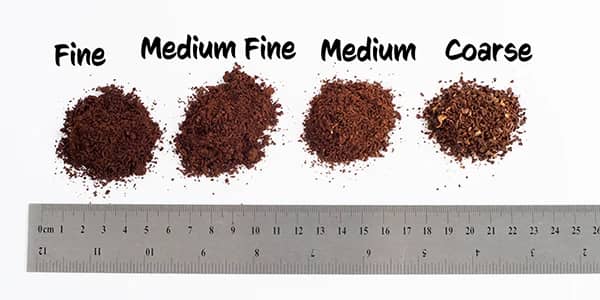
Use this table as your starting point. Adjust based on taste (details below). Particle size in microns is approximate; actual settings vary by grinder model.
| Brew Method | Grind Size | Particle Size (microns) | Looks Like |
|---|---|---|---|
| Espresso | Fine | 200 to 300 | Table salt or slightly finer |
| AeroPress | Fine to medium-fine | 300 to 500 | Between table salt and sand |
| Moka Pot | Medium-fine | 300 to 500 | Table salt |
| Pour Over (V60) | Medium-fine | 400 to 600 | Fine sand |
| Pour Over (Chemex) | Medium | 500 to 700 | Regular sand |
| Drip / Flat Bottom | Medium | 500 to 700 | Regular sand |
| French Press | Coarse | 800 to 1,000 | Sea salt or raw sugar |
| Cold Brew | Extra coarse | 1,000 to 1,500 | Coarse sea salt or peppercorns |
Pour Over Grind Size for Ethiopian Coffee
Pour over is where Ethiopian coffees truly shine. The method gives you precise control over extraction, and the paper filter produces a clean cup that lets florals and acidity come through. For a deeper walkthrough on technique, see our home brewing guide and our dedicated Ethiopian coffee pour over guide with region-specific recipes.
Hario V60
The V60 has a large single hole and a fast flow rate, so it needs a medium-fine grind to slow the water enough for full extraction. For a washed Yirgacheffe, start at a setting that produces particles similar to fine sand. Total brew time should land between 2:30 and 3:30 for a single cup (250 ml).
- If the brew finishes under 2:00, grind finer by one or two clicks.
- If it runs past 4:00, grind coarser. The cup will taste bitter and muted.
- A slight channelling (water finding fast paths through the bed) often signals an inconsistent grind from blade grinders.
Chemex
The Chemex uses a thicker filter that slows flow naturally. Compensate by grinding slightly coarser than V60, closer to medium. Target a brew time of 3:30 to 4:30 for 500 ml. The thicker filter also absorbs more oils, which emphasizes the bright citrus and tea-like qualities of Ethiopian coffee and reduces body.
Kalita Wave
The flat-bottom design with three small drain holes produces an even, forgiving extraction. Use a medium-fine grind, similar to V60 but one click coarser. Aim for 3:00 to 4:00 brew time. The Wave is an excellent choice for fruit-forward naturals from Guji or Sidamo because the even extraction highlights sweetness without over-emphasizing acidity.
Espresso Grind Size for Ethiopian Coffee
Espresso demands the finest grind of any common home method (only Turkish coffee goes finer), but Ethiopian single origins are trickier to dial in than blends. Light-roasted Ethiopian beans are denser and less soluble, which means you need to grind slightly finer than you would for a medium or dark roast. Our full Ethiopian espresso guide covers shot recipes and milk drink ratios.
- Starting point: 18 g in, 36 g out, 25 to 30 seconds.
- Adjust grind first. If the shot runs fast (under 20 seconds), grind finer. If it chokes (over 35 seconds), grind coarser.
- Expect bright acidity. Ethiopian espresso should taste vibrant and fruity, not flat. If it tastes sour and thin, grind one notch finer.
- Resting matters. Fresh Ethiopian beans (under 7 days off roast) produce more CO2, which can disrupt extraction. Let beans rest 10 to 14 days before pulling espresso shots.
French Press Grind Size for Ethiopian Coffee
French press is a full-immersion method with a long contact time (4 minutes), so it needs a coarse grind to prevent over-extraction. The metal filter lets oils and fine particles into the cup, giving Ethiopian coffee more body and mouthfeel than a paper-filtered brew.
Natural-process Ethiopian coffees work especially well in a French press. The body-forward profile of a natural Sidamo or Guji pairs with the heavier texture that French press produces. Washed coffees can taste slightly muddy in a French press if the grind is too fine, so err on the coarser side. For details on washed versus natural processing, see our dedicated guide.
- Grind to the consistency of coarse sea salt.
- Steep for 4 minutes, then press slowly.
- If the press is hard to push down, grinds are too fine.
- If the cup tastes watery after 4 minutes, grind slightly finer next time.
For step-by-step recipes, region-by-region bean picks, and troubleshooting, see our Ethiopian coffee French press guide.
AeroPress Grind Size for Ethiopian Coffee
The AeroPress is highly versatile. You can brew it as a concentrate (espresso-like) or a longer immersion (closer to French press). Grind size shifts accordingly.
Standard method (inverted, 2 minutes steep)
Use a medium-fine grind. Start with 15 g coffee, 200 ml water at 92 degrees Celsius. The cup should be clean and sweet with bright acidity.
Concentrate method (shorter, stronger)
Use a fine grind. 18 g coffee, 90 ml water, steep 1 minute, press, then dilute. This method produces an espresso-like shot that works well as a base for iced drinks.
For full AeroPress recipes with region-specific adjustments, inverted method instructions, and troubleshooting, see our dedicated Ethiopian coffee AeroPress guide.
Cold Brew Grind Size for Ethiopian Coffee
Cold brew extracts slowly over 12 to 24 hours with room-temperature or cold water. Use an extra coarse grind, coarser than French press. Finer grinds in cold brew lead to over-extraction and a muddy, bitter concentrate.
Ethiopian cold brew is naturally sweet and fruit-forward. Washed Yirgacheffe produces a cold brew that tastes like iced jasmine tea with a lemon finish. Natural Guji creates something closer to a blueberry lemonade. For detailed cold brew recipes, regional recommendations, and troubleshooting tips, see our complete guide to making cold brew with Ethiopian coffee.
- Ratio: 1:8 (coffee to water) for concentrate, 1:15 for ready-to-drink.
- Steep 16 to 20 hours in the refrigerator.
- Strain through a paper filter for a cleaner cup.
How to Tell If Your Grind Size Is Wrong
Taste is the best diagnostic tool. Before you change your water temperature, dose, or ratio, check your grind size first. It is the most likely cause of a bad cup.
Signs of over-extraction (grind too fine)
- Bitter, harsh, or astringent aftertaste.
- Dry, chalky feeling on the tongue.
- Flavours blend into a generic "strong coffee" taste with no distinct notes.
- Pour over brew time exceeds 4 minutes for a single cup.
Fix: Grind one click coarser and brew again.
Signs of under-extraction (grind too coarse)
- Sour, sharp, or vinegary taste that is not pleasant acidity.
- Thin, watery body with no sweetness.
- The cup tastes "empty" or unfinished.
- Pour over drains through in under 2 minutes.
Fix: Grind one click finer and brew again.
A well-extracted Ethiopian coffee should taste sweet, balanced, and complex. You should be able to identify specific flavour notes (citrus, berries, florals) rather than just "coffee." If this sounds new to you, our tasting notes guide explains what to look and taste for.
Burr Grinder vs Blade Grinder for Ethiopian Coffee
A burr grinder produces uniform particles. A blade grinder chops beans randomly, creating a mix of fine dust and large chunks. For most coffees, the difference is noticeable. For Ethiopian coffee, it is critical.
| Factor | Burr Grinder | Blade Grinder |
|---|---|---|
| Particle uniformity | High (consistent extraction) | Low (uneven extraction) |
| Grind adjustment | Precise, repeatable settings | No control beyond pulse timing |
| Heat generated | Low | High (can damage aromatics) |
| Effect on Ethiopian coffee | Preserves floral and fruit notes | Often produces bitter, muddy cups |
| Price range (Canada) | $50 to $300+ for home models | $20 to $40 |
If you are serious about Ethiopian specialty coffee, a burr grinder is the single best equipment upgrade you can make. A hand burr grinder in the $50 to $80 range will outperform any blade grinder at any price. The improvement is immediately obvious in the cup: cleaner acidity, more distinct flavour notes, and a sweeter finish.
This matters because Ethiopian beans cost more per gram than most commodity coffees. Grinding them with a blade grinder wastes that quality. You are paying for flavour complexity, and a uniform grind is what unlocks it.
How to Dial In Your Grind at Home
Dialling in means finding the exact grind setting that produces the best cup with your specific coffee, water, and brewer. Follow these steps each time you open a new bag.
- Start at the recommended setting from the chart above.
- Brew once using your normal recipe (dose, water, temperature).
- Taste before adding anything. Note bitterness, sourness, sweetness, and body.
- Adjust one click at a time. Too bitter? Go one click coarser. Too sour? Go one click finer.
- Change only one variable per brew. If you adjust grind and temperature at the same time, you will not know which change made the difference.
- Lock it in. Once the cup tastes balanced, note the setting and use it for the rest of the bag.
Keep in mind that beans change as they age. A bag that is 7 days off roast may need a slightly different setting than the same bag at 21 days. CO2 leaves the beans over time, making them easier to extract. If your coffee starts tasting slightly more bitter toward the end of a bag, go one click coarser. For more on freshness, see our storage guide for Canadian homes.
Frequently Asked Questions
What grind size is best for Ethiopian coffee?
It depends on your brew method. Medium-fine works for pour over, fine for espresso, coarse for French press, and extra coarse for cold brew. Ethiopian coffee responds best to a grind setting that lands in the middle of each method's range, then fine-tuned by taste.
Does grind size really affect flavour that much?
Yes. Grind size is the number one variable that determines extraction. With Ethiopian coffee, the difference between one or two grinder clicks can mean the difference between a floral, sweet cup and a bitter, flat one. The effect is more pronounced than with most commercial coffees because Ethiopian beans have a wider range of volatile flavour compounds.
Should I grind Ethiopian coffee finer than other origins?
Often, yes. Ethiopian beans grown at high altitude are denser and typically roasted lighter. Both factors reduce solubility compared to lower-altitude, darker-roasted coffees. A slightly finer grind compensates by increasing surface area and extraction time.
Can I use pre-ground Ethiopian coffee?
Pre-ground coffee loses aromatic compounds within minutes of grinding. For Ethiopian coffee, where jasmine, bergamot, and berry aromatics are the main appeal, pre-grinding significantly reduces what you taste. If you do not own a grinder, buy one before your next bag. A hand burr grinder under $80 will transform your coffee.
How do I know if my grinder is good enough?
Grind a small amount and look at the particles on a white plate. If they are mostly the same size, your grinder is working. If you see a mix of powder and large chunks, your grinder is producing too many fines and boulders, which makes consistent extraction impossible.
Conclusion: Get Your Ethiopian Coffee Grind Size Right
The right Ethiopian coffee grind size is the shortest path to a better cup at home. Start with the chart above, taste your first brew honestly, and adjust by one click. You do not need expensive equipment or barista training. You need a decent burr grinder, fresh beans, and willingness to pay attention to the cup.
Ethiopian coffee rewards precision. A bag of washed Yirgacheffe or natural Guji contains dozens of flavour compounds waiting to be extracted at just the right rate. Your grinder setting is what controls that rate. Getting it right turns a good cup into a memorable one.
Specialty Ethiopian Coffee, Sourced Through Our Own Export Company
Every bag we sell comes directly from Ethiopian farms through our family export company, Ethio Coffee Export. You get traceability, freshness, and flavour that generic importers cannot match.
Find the right Ethiopian beans for your grinder and brew method.
Related Articles
Brewing and Equipment
Flavour and Tasting
Buying and Storage
About This Insight: Written by Ethiopian Beans, a Canadian coffee company sourcing exclusively through our family export company Ethio Coffee Export in Ethiopia. Grind recommendations are based on specialty coffee standards and testing with Ethiopian single-origin beans. For current product availability and recommendations, please contact us.