Ethiopian Coffee French Press: A Complete Guide
Key Takeaway
Ethiopian coffee French press brewing produces some of the richest, most complex cups you can make at home. Use a coarse grind (800-1,000 microns), 30 g of coffee to 450 mL of water at 93-96 °C, and a 4-minute steep. Natural-process beans from Guji or Harar thrive in a French press; washed Yirgacheffe works best at a slightly finer setting. Pour immediately after pressing to lock in the flavour.
The French press is one of the most widely owned brewing devices in Canada, and yet it is one of the least understood. Millions of home brewers own a French press and use it without ever unlocking what it can actually do, especially with a single-origin coffee as expressive as Ethiopian. Getting an Ethiopian coffee French press right requires specific grind settings, water temperatures, and an understanding of how different Ethiopian regions and processing methods behave in full-immersion brewing.
This guide covers everything: the right recipe, the best Ethiopian beans for French press, region-by-region recommendations, a clean-cup technique that eliminates silt, and a troubleshooting section for every common problem. Ethiopian Beans sources exclusively through our family export company, Ethio Coffee Export, in Ethiopia, so everything here is grounded in direct experience with these specific beans. Here is how to make the most of them.
Why French Press Works for Ethiopian Coffee
French press is a full-immersion method: the grounds sit in contact with water for the entire brew, and no paper filter stands between you and the finished cup. That distinction matters enormously with Ethiopian coffee.
Paper filtration in pour over or drip brewing strips out coffee oils and fine particles, which is ideal for washed Ethiopian coffees where you want clarity and brightness. French press retains those oils, producing a heavier, rounder body. Natural-process Ethiopian coffees, which already carry pronounced fruit and chocolate character from their processing method, amplify beautifully in this environment. The result is a cup with genuine weight, sweetness, and complexity that a paper filter would mute.
There is also a practical appeal. French press brewing is forgiving, requires no expensive equipment, and produces a large volume at once. A standard 1-litre French press brews enough for two generous cups or four smaller ones, making it ideal for weekend mornings or sharing with a partner on a cold February morning in Toronto or Calgary.
To understand more about how processing choices change the cup, see our guide to washed vs natural Ethiopian coffee.
What You Need
The Beans
Choose a light to medium roast. Ethiopian coffee at this roast level retains its origin character: the floral aromatics, berry notes, and stone fruit sweetness that distinguish it from any other coffee on the planet. A dark roast obscures those qualities behind roast-derived bitterness and carbon notes. For French press specifically, a medium roast hits the sweet spot: you get body from the immersion method and complexity from the origin. See our guide to the best roast level for Ethiopian coffee for a full breakdown by region and brew method.
The Grinder
Use a burr grinder if possible. Blade grinders produce uneven particle sizes, leading to under-extracted fines (sour, weak spots) and over-extracted coarse pieces (bitter spots) in the same cup. For French press, you want a coarse, even grind that looks and feels like coarse sea salt. Our Ethiopian coffee grind size guide has exact micron ranges and adjustment tips if you want to dial in further.
The French Press
Any standard French press will work. Glass presses let you see the brew, which is helpful when learning. For better heat retention on a cold Canadian morning, a double-walled stainless steel press is worth the investment. Whatever you use, preheat the vessel with hot water for 30 seconds before brewing. This prevents the brewing temperature from dropping the moment you pour in your coffee, which causes inconsistent extraction.
Water
Filter your water if you can. Chlorine and excess minerals in tap water compete with and suppress delicate Ethiopian flavour compounds. Target 93-96 °C. If you do not have a temperature-controlled kettle, bring water to a boil and let it sit for 30-45 seconds before pouring. At sea level in Canada, that brings you into range.
Ethiopian Coffee French Press Recipe
This is the standard recipe. It works well with any Ethiopian bean and produces a balanced, full-bodied cup with good clarity.
| Parameter | Amount |
|---|---|
| Coffee dose | 30 g |
| Water | 450 mL |
| Ratio | 1:15 (coffee to water) |
| Water temperature | 93-96 °C |
| Grind size | Coarse (800-1,000 microns) |
| Steep time | 4 minutes |
Step-by-Step Instructions
- Preheat your French press. Fill it with hot water, swirl, and discard. This keeps the brew temperature stable throughout the steep.
- Grind 30 g of Ethiopian coffee to a coarse consistency (coarse sea salt). Measure by weight if possible; volume measurements vary with different bean densities.
- Add the grounds to the emptied French press and start your timer.
- Bloom: Pour 60 mL of hot water (93-96 °C) over the grounds, just enough to wet them evenly. Wait 30 seconds. This releases trapped CO₂ from freshly roasted beans and allows more even extraction during the main pour.
- Pour the remaining 390 mL of water (reaching 450 mL total) in a slow, steady stream. Place the lid on the press with the plunger pulled all the way up. Do not press yet.
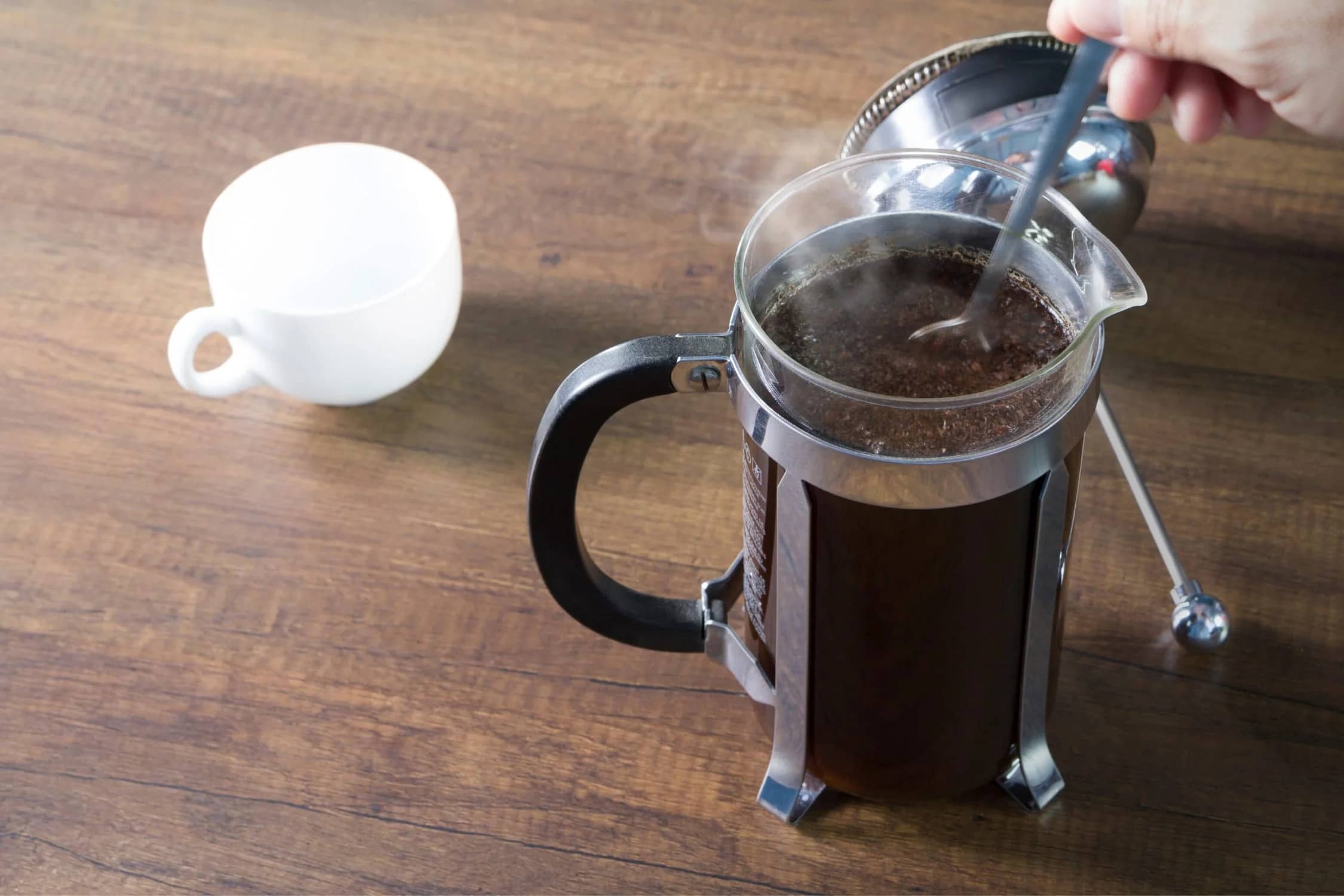
- Steep for 3:30 minutes more (4 minutes total from the main pour, accounting for the bloom). At the 4-minute mark, use a spoon to skim the floating crust of grounds from the surface before pressing. This one step noticeably cleans up the cup.
- Press slowly, using steady downward pressure over about 20-30 seconds. If the plunger is hard to push, your grind is too fine. If it falls with no resistance, grind finer next time.
- Pour immediately. Coffee left sitting in the press continues to extract against the grounds, turning bitter and astringent within a few minutes. Pour into cups or a separate carafe right after pressing.
The Clean Cup Technique: Less Silt, More Clarity
The biggest complaint about French press coffee is silt: the fine particles and sediment that collect at the bottom of the cup. With Ethiopian coffee, which is often lightly roasted and therefore denser than darker-roasted coffees, this can be more pronounced. The following technique, popularised by coffee educator James Hoffmann, produces a dramatically cleaner result without sacrificing body.
- Follow the standard recipe above, including the bloom.
- At the 4-minute mark, do not press. Instead, scoop off all the crust and foam from the surface until it is clean and flat.
- Replace the lid and let the brew sit undisturbed for another 5 minutes. The grounds will sink naturally to the bottom.
- Press the plunger just enough to hold the grounds in place, gently, without force. Pour very slowly so the settled grounds remain undisturbed.
Total time is about 9 minutes rather than 4, but the cup is dramatically less silty and showcases Ethiopian coffee's fruit and floral notes with unusual clarity for an immersion method. It is worth trying if you have found French press coffee too muddy in the past.
Best Ethiopian Regions for French Press
Ethiopia produces coffee across five main regions, each with a distinct flavour profile. French press suits some better than others, depending on processing method and cup character. Here is a region-by-region breakdown:
| Region | Processing | Cup Character | French Press Suitability |
|---|---|---|---|
| Guji | Natural | Berry, dark chocolate, stone fruit | Excellent |
| Harar | Natural | Fruity, wine-like, earthy | Excellent |
| Sidamo | Natural / Washed | Round, balanced, stone fruit | Very good |
| Yirgacheffe | Washed | Floral, jasmine, bright lemon | Good (slightly finer grind) |
| Limu | Washed | Mild, sweet, low acidity | Good |
Guji and Harar: The Natural-Process Champions
If you want the most rewarding Ethiopian coffee French press experience, start with a natural-process coffee from Guji or Harar. These beans carry intense berry and chocolate character that immersion brewing amplifies rather than mutes. In a French press, a natural Guji produces a cup that tastes of blueberry, dark chocolate, and brown sugar. A natural Harar brings a wine-like, almost jammy quality that is unlike any other coffee origin in the world. Both are full-bodied, sweet, and forgiving to brew.
Sidamo: Balanced and Approachable
Natural Sidamo coffees are an ideal starting point for anyone new to Ethiopian coffee in a French press. The flavour profile sits between the intensity of Guji and the brightness of Yirgacheffe: round, sweet, and approachable, with notes of peach, plum, and a gentle caramel finish. Washed Sidamo also works well in French press, delivering more clarity at the cost of some body.
Yirgacheffe: Bright, but Worth the Effort
Washed Yirgacheffe is most celebrated as a pour over coffee, where its jasmine, bergamot, and lemon notes shine through clean, filtered extraction. In a French press, those delicate aromatics can get buried under the heavier body that immersion produces. That said, Yirgacheffe in a French press is still exceptional, particularly if you grind slightly finer than your standard coarse setting and extend the steep time by 30 seconds. The result is a more complex cup with floral aromatics pushing through a round, sweet base.
Limu: Quiet but Rewarding
Limu is Ethiopia's quietest region, producing mild, sweet coffees with low acidity and a clean finish. In a French press, Limu makes an easygoing, accessible cup that works well for those who find other Ethiopian regions too bright or intense. It is an excellent everyday option. For a deeper look at how these regions compare, see our Ethiopian coffee regions compared guide.
Washed vs Natural Ethiopian Coffee in a French Press
Processing method is the single biggest variable in how an Ethiopian coffee behaves in a French press. Here is what to expect and how to adjust:
Natural-Process Ethiopian Coffee
Naturals were dried with the coffee cherry intact, absorbing fruit sugars and flavour from the pulp. In a French press, this translates directly: more body, more sweetness, more fruit. Use the standard recipe (coarse grind, 1:15 ratio, 4 minutes). These coffees are very forgiving and peak in immersion brewing.
Washed Ethiopian Coffee
Washed coffees were processed without the fruit pulp, producing a cleaner, more transparent cup. In a French press, they can taste slightly thin if brewed at the standard coarse grind. Try grinding one or two clicks finer, extending the steep to 4:30 minutes, or increasing the dose to 32-33 g per 450 mL. Any of these adjustments adds the body that washed coffees lack in immersion brewing without pushing into bitterness.
Not sure whether your bag is washed or natural? Check the label. Most specialty coffee producers and importers list the processing method clearly. Our washed vs natural Ethiopian coffee guide explains what to look for and what it means for your cup.
Troubleshooting Your French Press Brew
Most French press problems come down to grind size, dose, steep time, or water temperature. Here is a quick reference for the most common issues:
Bitter or harsh cup
Over-extraction. Grind coarser (one or two clicks at a time), shorten the steep by 30 seconds, or lower the water temperature by 2-3 °C. With Ethiopian naturals, which are sweeter than most coffees, bitterness often points to a too-fine grind.
Sour or sharp cup
Under-extraction. Grind finer, extend the steep by 30 seconds, or raise the water temperature. Sourness in Ethiopian coffee often reads as an unpleasant acidity rather than the bright, pleasant citrus the bean is capable of.
Muddy or silty cup
Too many fine particles in the cup. Try the Clean Cup Technique above: skim the crust, wait for grounds to settle, then pour slowly. Grind a little coarser. If the problem persists with your current grinder, a burr grinder upgrade will make the biggest single difference to cup clarity.
Weak or watery cup
Increase your dose. Try 33-35 g per 450 mL (a 1:13 or 1:14 ratio). Alternatively, extend the steep to 4:30 or 5 minutes, or grind slightly finer. Watery French press often means the ratio is too low rather than under-extraction per se.
Plunger too hard to push
Grind is too fine. Do not force it: a forced plunge breaks the filter seal and sends grounds into your cup. Loosen the grind by two or three clicks on your next brew.
Frequently Asked Questions
How much coffee should I use for a French press with Ethiopian beans?
Use 30 g of coffee per 450 mL of water (a 1:15 ratio). This is a strong, flavourful starting point. For a lighter cup, scale to 25 g per 450 mL. For a bolder cup, try 33-35 g. These figures are based on immersion time of 4 minutes; adjust the dose before adjusting anything else.
How long should you steep Ethiopian coffee in a French press?
Four minutes is the standard starting point for a coarse grind. Washed Ethiopian coffees may benefit from 4:30 minutes. The Clean Cup Technique uses a total of about 9 minutes but produces a less silty result. Do not exceed 5 minutes on a standard press without going coarser on the grind, or bitterness sets in quickly with the lighter roasts typical of specialty Ethiopian coffee.
Is Ethiopian Yirgacheffe good for French press?
Yes, though it performs best in a pour over, where paper filtration preserves its delicate floral notes. In a French press, Yirgacheffe produces a rounder, heavier cup with the same aromatic fragrance but less of the bright citrus acidity. Grind slightly finer than your standard French press setting and steep for 4:30 minutes to compensate.
Should I use light or dark roast Ethiopian coffee in a French press?
Light to medium roast produces the best results. Light roast preserves Ethiopian coffee's fruit and floral complexity; French press adds body and sweetness that balance the brightness. Dark roast obscures origin character entirely. If you find light roast too sharp, choose a medium roast rather than going darker. See our roast level guide for a full breakdown.
Can you use a French press to cold brew Ethiopian coffee?
You can, though a dedicated cold brew vessel produces better results. If you use a French press for cold brew, steep 75 g of coarsely ground Ethiopian coffee in 750 mL of cold water for 16-20 hours in the refrigerator, then press gently and decant. For a full technique with region-specific recommendations, see our Ethiopian coffee cold brew guide.
Ethiopian coffee French press brewing rewards a little attention to detail. Get the grind coarse, the water to temperature, and the steep time right, and this modest piece of equipment produces a cup that rivals anything from a speciality café. Natural-process Guji and Harar are the place to start; the Clean Cup Technique will keep you coming back. If you are sourcing your beans in Canada, Ethiopian Beans ships fresh-roasted single-origin lots directly to your door. See our full Ethiopian coffee brewing guide for pour over, AeroPress, cold brew, and more, or visit our tasting notes guide to understand what you are tasting in the cup.
Premium Ethiopian Coffee, Shipped Fresh Across Canada
Ethiopian Beans sources directly at origin through our family export company, Ethio Coffee Export, in Ethiopia. Every lot is traceable to its region and processing method, roasted in Canada, and shipped fresh to your door. Natural-process Guji and Harar are in stock now and are exceptional in a French press.
Orders ship domestically within Canada. No import delays, no customs surprises.
Related Articles
Brewing & Preparation
Beans & Selection
Tasting & Enjoyment
About This Insight: Written by Ethiopian Beans, a Canadian coffee company that sources single-origin Ethiopian coffee at origin through Ethio Coffee Export, our family export company based in Addis Ababa, Ethiopia. Brewing parameters and region recommendations reflect our direct experience with Ethiopian beans across three decades of sourcing heritage. Contact us at hello@ethiopianbeans.ca for current availability or sourcing questions.