By Ethiopian BeansMar 25, 202612 min read
Fair Trade Ethiopian Coffee: A Guide for Canadians
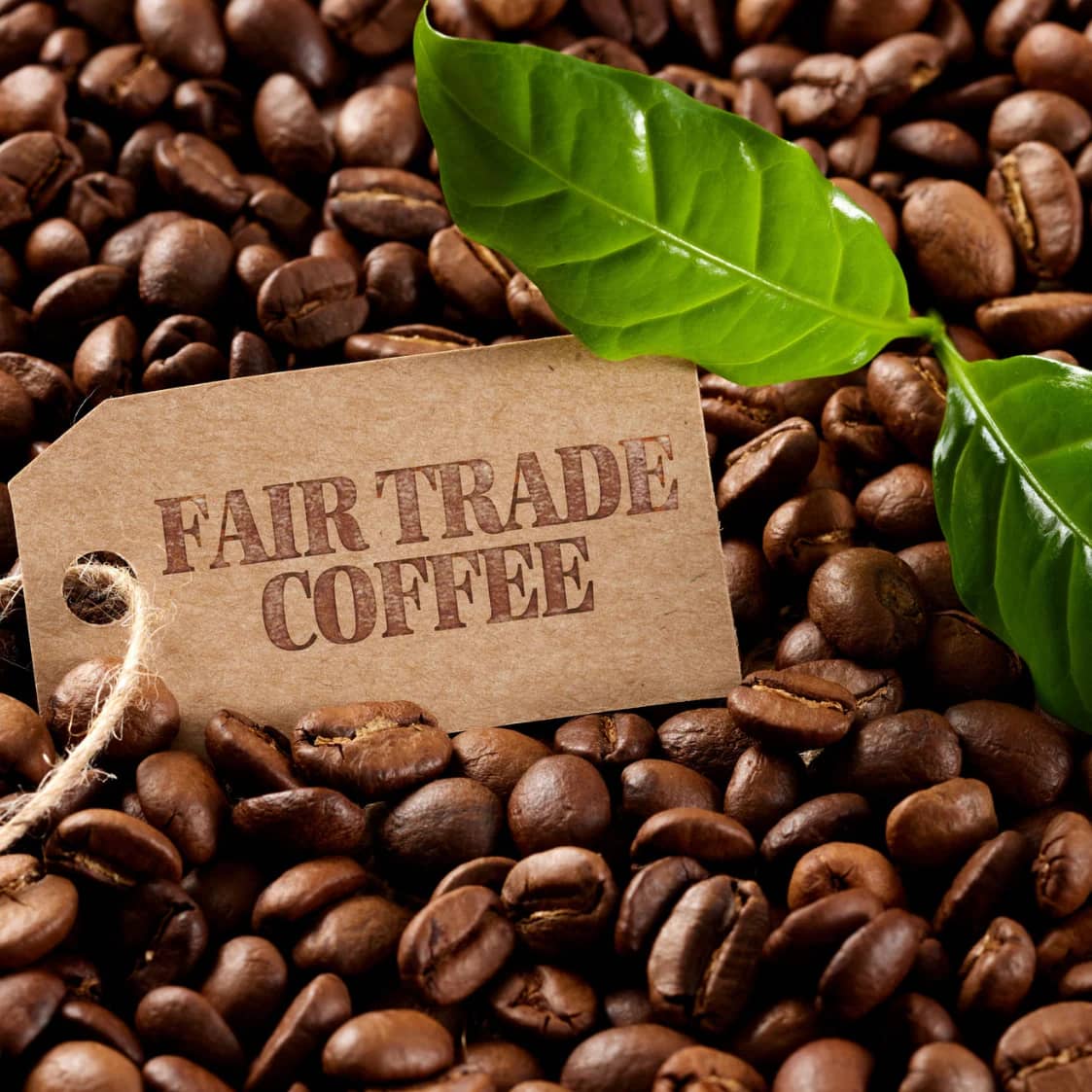
Key Takeaway
Fair trade Ethiopian coffee guarantees farmers a minimum price of $1.80 USD per pound for washed Arabica, plus a $0.20 community premium. But fair trade is one of several ethical sourcing models. Direct trade and relationship-based sourcing through known supply chains can deliver equal or greater benefits to Ethiopian farming communities. For Canadian buyers, understanding these models helps you choose coffee that aligns with your values and your palate.
Fair trade Ethiopian coffee is one of the most searched ethical coffee categories in Canada, and for good reason. Canadians drink an average of 2.7 cups of coffee per day, making the country the tenth-largest coffee consumer globally. As consumer awareness of supply chain ethics grows, more Canadian buyers want to know that their morning cup supports the farmers who grew it.
Ethiopia is the birthplace of Arabica coffee, with over four million smallholder farming households producing the crop. The majority of these farmers earn modest incomes and grow coffee on plots smaller than half a hectare. Fair trade certification aims to protect them with minimum prices and community investment funds. But it is not the only path to ethical sourcing, and for specialty Ethiopian coffee, it may not always be the best one.
This guide breaks down how fair trade works for Ethiopian coffee, how it compares to direct trade, and what Canadian consumers should look for when buying ethically sourced beans.
What Fair Trade Means for Ethiopian Coffee
Fair trade is a certification system managed by Fairtrade International (which oversees the Fairtrade mark used in Canada through Fairtrade Canada) and Fair Trade USA (which runs its own Fair Trade Certified programme). Both systems share a common goal: ensuring coffee farmers receive a price that covers sustainable production costs, regardless of market volatility.
Fairtrade Minimum Price and Premium
The Fairtrade system sets a floor price for coffee called the Fairtrade Minimum Price. As of the most recent update (effective August 2023), the minimum prices are:
| Coffee Type | Fairtrade Minimum Price (USD/lb) | Fairtrade Premium (USD/lb) |
|---|---|---|
| Washed Arabica | $1.80 | $0.20 |
| Natural Arabica | $1.75 | $0.20 |
| Organic Washed Arabica | $2.10 | $0.20 |
The minimum price acts as a safety net. When global coffee market prices fall below this floor, certified buyers must still pay at least the minimum. When market prices exceed it, buyers pay the market rate. The Fairtrade Premium ($0.20/lb) is paid on top and goes into a community fund that cooperatives invest in infrastructure, health care, education, or farm improvements.
For context, the previous washed Arabica minimum was $1.40/lb. The 29% increase in 2023 reflected rising production costs due to climate change, input price inflation, and global economic pressures on smallholder farmers.
How Fairtrade Certification Works in Ethiopia
Individual Ethiopian smallholder farmers do not hold Fairtrade certification themselves. The system certifies cooperatives and cooperative unions, which aggregate coffee from hundreds or thousands of member farmers. Major certified cooperatives in Ethiopia include those in Yirgacheffe, Sidamo, and Limu.
Certification requires annual audits by FLOCERT (Fairtrade's independent certifier), compliance with labour and environmental standards, and documented record-keeping. For remote highland communities where most Ethiopian coffee grows, meeting these requirements demands resources and organisation that many smaller cooperatives cannot afford.
This creates a paradox. The farmers who most need the protection of a minimum price are often the ones least able to access the certification that provides it.
How Ethiopian Coffee Is Traded: The ECX System
Understanding fair trade in Ethiopia requires understanding the Ethiopian Commodity Exchange (ECX), which shapes how most coffee leaves the country.
Established in 2008, the ECX was created to modernise Ethiopia's agricultural trading system. When the exchange launched, it became mandatory to trade nearly all coffee through the ECX. Coffee is deposited in ECX-operated warehouses, where it is sampled, graded by government experts, and sold through the exchange. This system brought transparency and price discovery to a market previously dominated by informal brokers.
The Role of Cooperatives
Cooperatives are exempt from selling through the ECX. They can work under a cooperative union to hull, grade, and export coffee directly to international buyers. This exemption is critical for fair trade, because it preserves the traceability that Fairtrade certification requires. Coffee sold through the ECX is grouped by region and grade, which can obscure the identity of the specific cooperative or community that produced it.
Major cooperative unions like the Oromia Coffee Farmers Cooperative Union (OCFCU) and Sidama Coffee Farmers Cooperative Union (SCFCU) manage Fairtrade-certified exports for thousands of member farmers. These unions handle the logistics, paperwork, and quality control needed to access international fair trade markets.
Private Exporters and Direct Sales
Recent reforms in Ethiopia have also enabled private exporters to source coffee more directly. Large commercial farms (roughly 5% of Ethiopian coffee production) can process and export independently. Ethiopia's evolving export procedures increasingly allow direct market integration, enabling exporters to work more closely with specific washing stations and farming communities.
This shift toward direct market access is significant for specialty coffee. It means exporters like our family company, Ethio Coffee Export, can source traceable lots from specific cooperatives and growing regions, providing the kind of transparency that ethical buyers value, whether or not a Fairtrade label is attached.
Fair Trade vs Direct Trade Ethiopian Coffee
Fair trade and direct trade represent two different approaches to ethical coffee sourcing. Neither is universally better; each has strengths and limitations that Canadian buyers should understand.
| Feature | Fair Trade | Direct Trade |
|---|---|---|
| Certification | Third-party audits (FLOCERT); standardised logo | No formal standard; self-reported by roaster/importer |
| Minimum Price | Guaranteed floor ($1.80/lb washed Arabica) | Typically exceeds fair trade prices, but no guarantee |
| Community Investment | $0.20/lb premium for community projects | Varies; some roasters invest directly in infrastructure |
| Traceability | To cooperative level | Often to washing station or specific lot |
| Quality Focus | Standards focus on social/environmental criteria | Relationship built around cup quality and scoring |
| Accessibility for Farmers | Requires cooperative membership and audit fees | Requires a willing buyer; no certification cost |
What Fair Trade Guarantees
Fair trade's greatest strength is its safety net. In a volatile commodity market where Arabica coffee prices can swing dramatically within a single year, the minimum price protects cooperatives from selling at a loss. The social premium provides predictable community funding; cooperatives vote on how to spend it. Common investments include clean water projects, school construction, and processing equipment upgrades.
Fair trade also enforces labour standards (no forced or child labour) and environmental standards (restricted pesticide use, soil and water conservation). These requirements are audited annually, providing a level of accountability that is verifiable by consumers.
What Direct Trade Offers
Direct trade relationships typically pay prices well above the Fairtrade minimum, often 25% to 100% more. The premium is tied to cup quality: higher-scoring lots command higher prices, incentivising farmers to invest in better processing, careful picking, and post-harvest sorting. Specialty Ethiopian coffees scoring 85 or above on the SCA scale regularly trade at $3.00 to $6.00+ USD per pound, far exceeding the $1.80 Fairtrade floor.
Direct trade also delivers deeper traceability. Rather than knowing your coffee came from a certified cooperative in Guji, you might know the specific washing station, the altitude, the harvest date, and the processing method. For specialty coffee consumers in Canada who value flavour complexity — the floral notes of a washed Yirgacheffe or the berry intensity of a natural Harar — this level of detail matters.
Is One Better Than the Other?
The honest answer: it depends on the context. Fair trade is most impactful for commodity-grade coffee, where market prices hover near or below production costs. It provides a critical floor that prevents exploitation. For specialty-grade Ethiopian coffee, direct trade relationships often deliver more value to farmers because the quality premium far exceeds the fair trade minimum.
The risk with direct trade is inconsistency. Without third-party verification, the term "direct trade" can mean anything from a genuine multi-year sourcing partnership to a one-time purchase through a broker marketed as direct. Fair trade, for all its imperfections, provides an auditable standard.
The best approach is to look beyond labels. A company that can tell you exactly where your coffee comes from, how it was processed, and what the farmer was paid is demonstrating ethical sourcing in practice, regardless of which certification logo appears on the bag.
How Direct Sourcing Works at Ethiopian Beans
Ethiopian Beans sources all of its coffee through our family export company, Ethio Coffee Export, based in Ethiopia. This is not a broker relationship or a one-time import arrangement. Our family has over three decades of sourcing heritage in the Ethiopian coffee trade, with one brother managing operations in Ethiopia and the other running the Canadian consumer brand.
This structure gives us direct access to cooperatives, washing stations, and farming communities across all major Ethiopian coffee regions. We know the people who grow and process the coffee. We can verify farming practices, processing quality, and fair compensation at the source, not through an annual audit snapshot, but through ongoing, year-round presence.
For Canadian customers, this means complete traceability on every bag. You can see the region, the cooperative, the processing method, and the grade. This level of supply chain visibility is the practical equivalent of what fair trade certification aims to provide: assurance that your purchase supports the people who grew your coffee.
Direct sourcing also removes intermediary margins. When fewer middlemen sit between the farmer and the consumer, a greater share of the final price reaches the origin. This financial stability supports continued investment in quality and sustainable farming without depending on certification premiums.
What Canadian Buyers Should Look For
Whether you prioritise fair trade certification, direct trade transparency, or some combination of both, these practical guidelines will help you evaluate ethical claims when buying Ethiopian coffee in Canada.
Labels and Certifications to Check
- Fairtrade Canada mark: Confirms the coffee meets Fairtrade International standards, including minimum price and social premium. Look for the green and blue Fairtrade logo on the packaging.
- Fair Trade Certified (Fair Trade USA): A separate US-based certification with similar goals but different audit standards. Common on coffee sold through US-based roasters.
- Rainforest Alliance: Focuses on environmental sustainability and farm management. Does not include a minimum price guarantee.
- Single-origin designation: A region name (Yirgacheffe, Guji, Sidamo) indicates traceable sourcing and typically higher quality standards.
Questions to Ask Your Roaster
A few pointed questions reveal more about ethical sourcing than any logo:
- Which cooperative or washing station does this coffee come from?
- Do you have a direct relationship with the exporter, or was this purchased through a commodity broker?
- What price did the farmer or cooperative receive for this lot?
- How is the coffee processed, and who made that decision?
A roaster who can answer all four questions is sourcing responsibly. A roaster who responds with vague claims about "supporting farmers" without specifics should raise questions.
Price Expectations in Canada
In Canada, certified Fairtrade Ethiopian coffee typically costs $20 to $30 CAD for a 340 g bag. Non-certified specialty Ethiopian coffee from a transparent supply chain sits in a similar range ($18 to $28 CAD), because the cost of quality sourcing is reflected in the price whether or not a certification fee is included.
If you see Ethiopian coffee priced significantly below this range ($12 to $14 CAD for 340 g), it is almost certainly commodity grade purchased through multiple intermediaries. At those prices, the farmer received very little per kilogram. Paying a fair price for quality coffee is itself an ethical act, regardless of which label the bag carries.
For a deeper look at what drives pricing, see our article on why Ethiopian coffee costs what it does.
Does Fair Trade Ethiopian Coffee Taste Different?
Fair trade certification is about economics and social standards, not flavour. A Fairtrade-certified Yirgacheffe and a non-certified Yirgacheffe from the same cooperative can taste identical, because the processing, altitude, and variety are the same.
That said, there is an indirect quality connection. Fair trade cooperatives that invest their social premium in better processing equipment (depulpers, drying beds, water management systems) can improve cup quality over time. Stable income from fair trade pricing also reduces pressure on farmers to pick unripe cherries early, which degrades flavour.
Direct trade relationships tend to produce the highest cup scores, because the buyer-farmer relationship is explicitly built around quality improvement. If you prioritise complex tasting notes — the jasmine and bergamot of a top-tier Yirgacheffe, the peach and strawberry of a Guji natural — direct trade lots from known washing stations consistently deliver the most expressive cups.
For Canadian home brewers, the best approach is to choose a roast level and brewing method that suits Ethiopian coffee's delicate character, and then select a sourcing model that matches your ethical priorities. Quality and ethics are not competing goals; in specialty coffee, they reinforce each other.
Frequently Asked Questions
Is fair trade Ethiopian coffee worth the extra cost?
Fair trade Ethiopian coffee provides a guaranteed minimum price and community premium for farmers. If the certification gives you confidence in the sourcing ethics, the $2 to $4 CAD premium per bag is a reasonable cost. Transparent direct trade sourcing provides similar or greater benefit to farmers without the certification fee.
What is the Fairtrade minimum price for Ethiopian coffee?
As of August 2023, the Fairtrade Minimum Price for washed Arabica coffee (which includes most Ethiopian specialty coffee) is $1.80 USD per pound, plus a $0.20 Fairtrade Premium for community investment. When the market price exceeds this floor, farmers receive the higher market rate.
How is fair trade different from direct trade coffee?
Fair trade is a certified system with third-party audits, minimum prices, and standardised rules. Direct trade has no formal certification; it describes a purchasing relationship where the roaster or importer buys directly from farmers, typically at prices exceeding fair trade minimums, with a focus on cup quality.
Can I buy fair trade Ethiopian coffee in Canada?
Yes. Several Canadian roasters and retailers sell Fairtrade-certified Ethiopian coffee, including Yirgacheffe, Sidamo, and Limu origins. Look for the Fairtrade Canada mark on packaging, or ask your roaster about their sourcing model and the cooperatives they work with.
How do I know if my Ethiopian coffee is ethically sourced?
Look for either a Fairtrade certification logo or a transparent supply chain disclosure from the roaster. Ask where the coffee was grown, which cooperative produced it, and how it was exported. A credible seller can identify the origin, processing method, and sourcing path from Ethiopia to Canada.
Ethically Sourced Ethiopian Coffee, Shipped Fresh Across Canada
Ethiopian Beans sources single-origin coffee exclusively through our family export company, Ethio Coffee Export, in Ethiopia. With over 30 years of sourcing heritage, we provide full traceability from cooperative to cup. Every bag ships with complete origin details, fast domestic delivery, and the assurance that your purchase supports Ethiopian farming communities directly.
Related Articles
Sourcing and Quality
Buying and Pricing
Region Guides
About This Insight: Written by Ethiopian Beans, a Canadian coffee company sourcing exclusively through our family export company, Ethio Coffee Export, in Ethiopia. We provide complete traceability from origin to your cup. Information on Fairtrade pricing reflects current Fairtrade International standards (updated August 2023). Contact us for current availability, shipping information, and sourcing details.