By Ethiopian BeansApr 21, 202611 min read
Ethiopian Coffee Chemex: Best Beans and Brew Guide
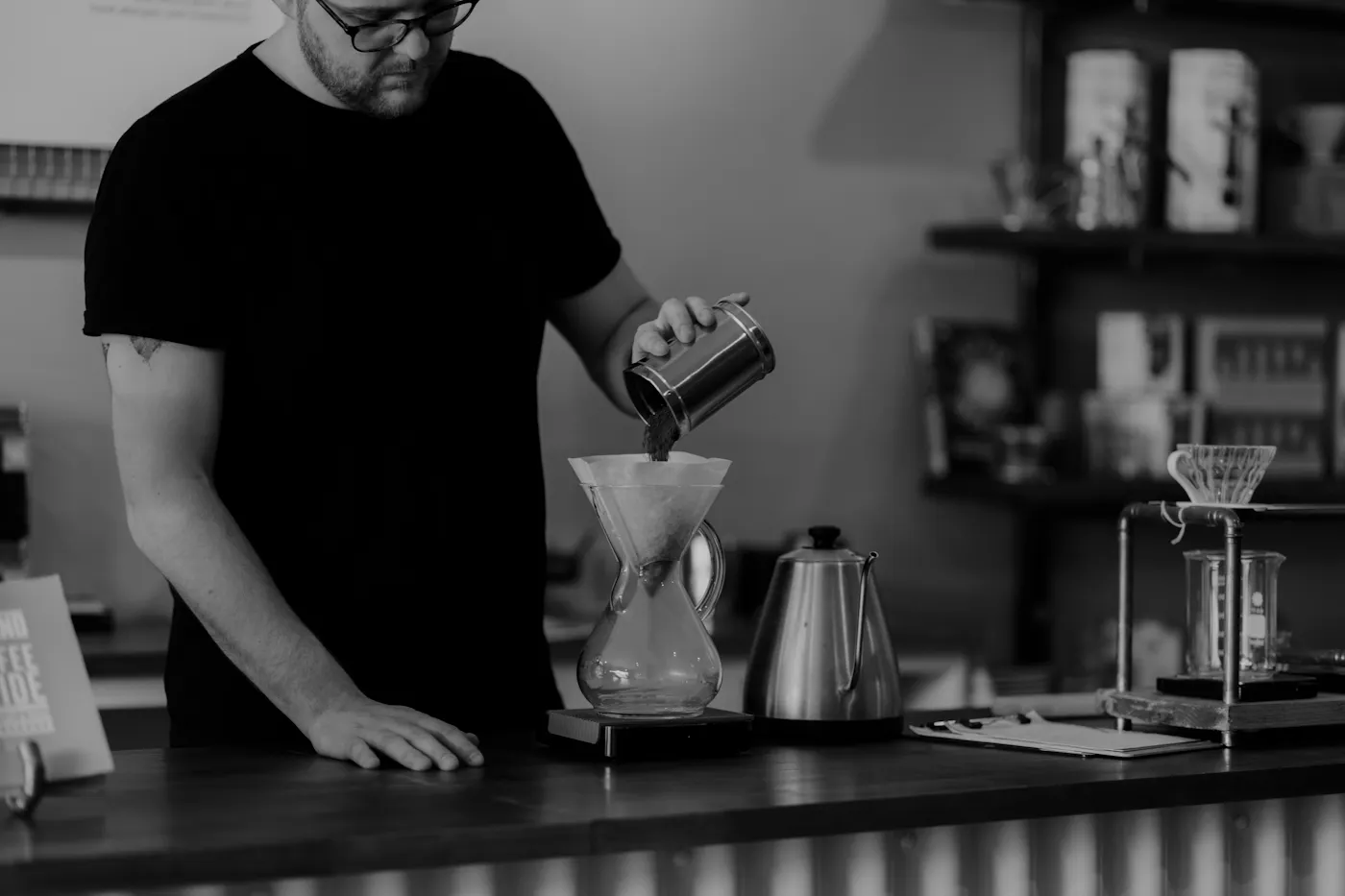
Why does your Chemex sometimes make Ethiopian coffee taste brilliant, then flat the next morning? Most home brewers blame grind size first. The bigger issue is usually fit: your bean style, ratio, and pouring rhythm are not aligned yet. Ethiopian coffee Chemex brewing rewards precision, and once it clicks, the cup feels polished and vivid.
You are not chasing a single magic recipe. You are choosing the right lane for your coffee lot. In our cupping and brew tests through Ethio Coffee Export sourcing samples, one variable changed flavour faster than anything else: brew strength strategy. Chemex filter thickness strips noise from the cup, so every decision becomes obvious within one brew.
What Ethiopian Coffee Chemex Brewing Does Best
Key Takeaway
Ethiopian coffee Chemex results improve fastest when you choose a target style before brewing: crisp and aromatic at 1:16 to 1:17, or rounder and sweeter at 1:15. Use medium-coarse grind, 92-96°C water, and total brew time of 4:00 to 5:00. Adjust grind first, then ratio.
Chemex is excellent for coffees that carry layered aromatics and a clean finish. That is why many drinkers reach for Ethiopian origins when using this brewer. Compared with immersion methods, Chemex creates more separation in flavour phases. You notice entry, mid-palate, and finish as distinct moments.
If your brews taste hollow, do not abandon the brewer. Use the water quality baseline, then tighten your ratio and grind progression. You can usually fix the cup in one or two attempts.
Bean Selection: Fast Decision Tree for Canada
Use this path before your first brew. It is built for Canadian home setups, where room temperature and water mineral profile shift across seasons.
Start here:
If you want a cleaner, lifted cup: choose washed lots, start at 1:16.5, keep agitation gentle.
If you want deeper fruit sweetness: choose natural lots, start at 1:15.5, extend bloom to 45 seconds.
If your tap water is hard: target 1:16 to avoid harsh finish and keep water near 92-93°C.
If your city water is very soft: target 1:15 to build body and brew near 95-96°C.
Need help selecting a roast before brewing? This buying guide for Ethiopian coffee pairs nicely with the decision tree above.
Regional Taste Expectations in Chemex
Forget generic flavour cards. In Chemex, Ethiopian regions often separate by texture and finish more than headline notes.
- Yirgacheffe: feather-light texture with a polished, almost sparkling finish that fades cleanly.
- Guji: rounder centre palate, with lingering fruit sweetness that stays after the cup cools.
- Sidamo: supple body and soft sugar-cane style sweetness that makes daily brewing easy.
- Limu: composed and mellow, with a smooth exit that suits long morning brews.
- Harar naturals: heavier mouthfeel and dense, drying finish, excellent when brewed slightly stronger.
If you want origin context before you brew, compare the growing zones directly on our pages for Yirgacheffe, Guji, and Sidamo.
Core Recipe: 700 mL Chemex (4-6 Cup Brewer)
This recipe is designed for Ethiopian coffee Chemex brewing and uses metric-only measurements.
- Dose: 42 g coffee, medium-coarse grind.
- Water: 700 mL at 93-95°C.
- Ratio: 1:16.7 baseline (move to 1:15.5 for fuller style).
- Bloom: 90 mL for 40 seconds, ensure full saturation.
- Main pours: add to 300 mL, then 500 mL, then 700 mL in controlled circles.
- Total time: target 4:15 to 5:00 including drawdown.
Keep your stream narrow and low. Over-agitation creates muddiness in Chemex faster than in many other drippers.
Quick Rescue Rules
Cup tastes sharp and thin
Grind slightly finer, keep ratio, increase water temperature by 1-2°C.
Cup tastes dry and bitter
Grind coarser first. If needed, open ratio from 1:16 to 1:16.7.
Drawdown stalls past 5:30
Reduce agitation and check that the triple filter side faces the spout.
Flavour is clean but dull
Use fresher beans and verify water chemistry with a practical filter setup.
Canadian Brewing Context Most Guides Skip
Competitor guides rarely address Canadian realities: changing water composition by city, winter indoor dryness affecting static and grind distribution, and domestic delivery cadence. Those factors are why two identical recipes can taste different in Vancouver and Calgary.
The Canadian Food Inspection Agency (CFIA) framework reinforces why clear labelling and traceability matter to buyers. At home, that means choosing bags with roast date and origin detail you can actually use to tune your Chemex process.
On the market side, the International Coffee Organization reports continued price and export volatility. For consumers, consistent quality is easier when you buy from a Canadian roaster with stable sourcing relationships and predictable domestic shipping windows.
Coffee remains deeply embedded in daily life across Canada, and the Coffee Association of Canada continues to track shifting habits and market dynamics. In practice, that means more home brewers looking for cafe-level clarity without cafe spend.
FAQ: Ethiopian Coffee Chemex in Canada
Is Ethiopian coffee always better in Chemex than in V60?
Not always. Chemex emphasises clarity and softer edges because of its thicker filter, while V60 often pushes intensity and sparkle. If your goal is a smooth, composed cup for batch brewing, Chemex wins. If you want high-energy acidity and sharper detail, V60 may suit your taste better.
What is the best Ethiopian coffee Chemex ratio for beginners?
Start at 1:16 using medium-coarse grind and 93-94°C water. This gives a balanced cup with enough sweetness and minimal bitterness risk. Once consistent, move one step at a time: 1:15.5 for more body or 1:16.7 for a lighter profile. Keep all other variables stable while testing.
Should I pick washed or natural Ethiopian beans for Chemex?
Choose by outcome, not trend. Washed lots are excellent for transparent structure and delicate aromatic layering. Naturals are stronger in sweetness and weight, especially as the brew cools. If your grinder consistency is still improving, washed lots are usually easier to dial in repeatably.
How fresh should beans be for Ethiopian coffee Chemex brewing?
For most lots, the sweet spot is about 7 to 30 days after roast. Earlier than that, excess gas can disrupt extraction and create uneven drawdown. Much later, top aromatics drop off and Chemex can feel flat. Buy volumes you can finish within three to four weeks for best results.
Conclusion: Build Your Ethiopian Coffee Chemex Routine
Ethiopian coffee Chemex brewing is less about complexity and more about disciplined repetition. Pick a clear target style, lock your baseline recipe, and adjust one variable each session. Within a week, your cup profile becomes predictable.
Ethiopian Beans sources at origin through our family export operation, Ethio Coffee Export, then roasts for Canadian consumers who value freshness, traceability, and flavour precision. If your goal is a cleaner and more intentional morning cup, this is the method worth mastering.
Dial In Your Next Chemex Bag
Choose single-origin Ethiopian coffees selected for clarity in filter brewing, sourced at origin through our family export company and shipped quickly within Canada.
You get roast-date transparency, region-level detail, and support from a Canadian team focused on practical home brewing outcomes.
Related Articles
Brewing Methods
Dial-In Fundamentals
Origins and Buying
Practical Next Steps
About This Insight: Produced by the Ethiopian Beans team in Canada using brew tests and sourcing context from Ethio Coffee Export in Ethiopia. Market references are linked to public sources and may change over time. For current product and shipping details, contact us.