By Ethiopian BeansApr 19, 202610 min read
Best Water for Coffee: How It Shapes Your Cup
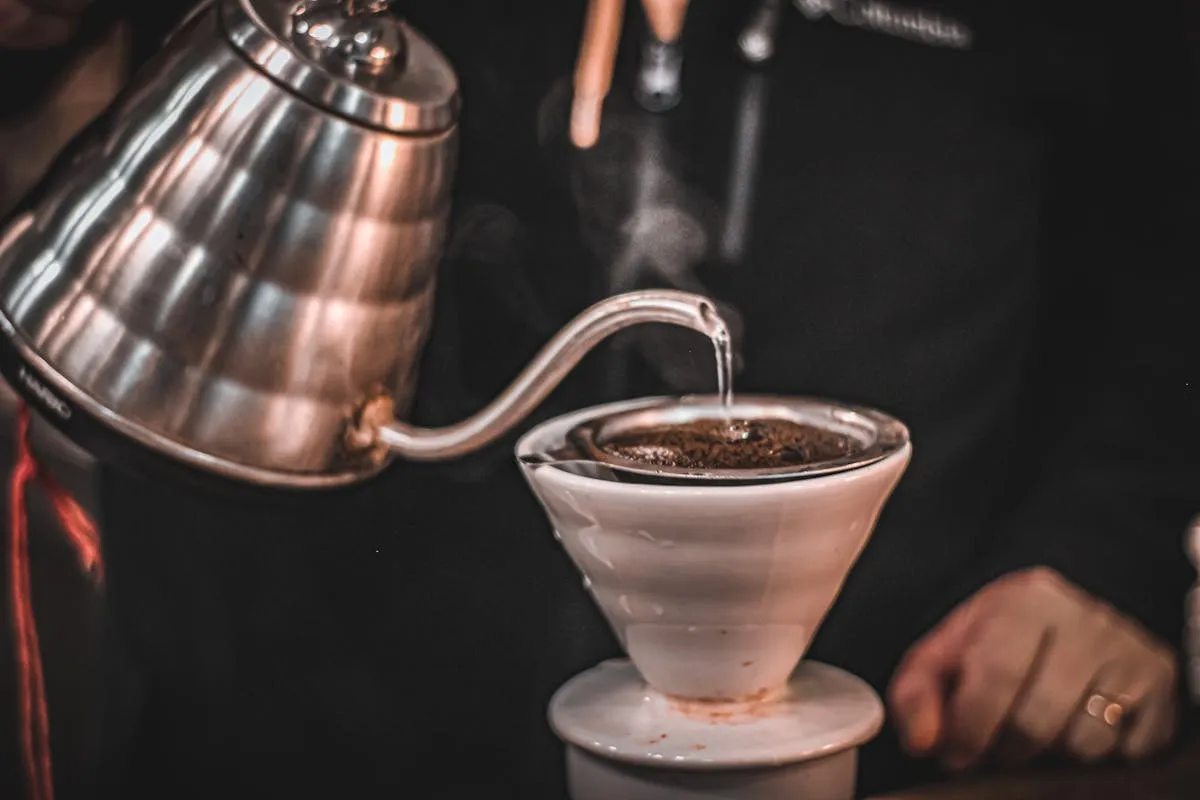
You spent $24 CAD on a bag of single-origin Ethiopian coffee, dialled in your grind, and followed a pour-over recipe to the gram. The cup tasted flat. Muted. Nothing like the tasting notes on the bag promised. Before you blame the beans or the roaster, look at the best water for coffee you could be using, because the water in your kettle is the most likely culprit.
Filter coffee is over 98% water. Espresso sits around 90%. Every dissolved mineral, every trace of chlorine, every point on the pH scale shapes how flavour compounds extract from ground coffee. Yet most home brewers never think about water at all. They fill the kettle from the tap and move on. For a dark-roasted commodity blend, that might not matter much. For a delicate washed Ethiopian with bright acidity and layered floral notes, it changes everything.
Why Water Quality Matters More Than You Think
Key Takeaway
The best water for coffee has a TDS of 75–150 ppm, a pH between 6.5 and 7.5, moderate hardness (50–100 ppm), low alkalinity (30–50 ppm), and zero chlorine. For Ethiopian coffee, where subtle floral and fruit notes define the cup, hitting these targets matters more than upgrading your grinder. Filtered tap water is the easiest starting point for most Canadian home brewers.
Water acts as a solvent during brewing. It pulls acids, sugars, oils, and aromatic compounds out of ground coffee and into your cup. The mineral composition of your water determines which compounds dissolve first, how quickly they extract, and how they interact on your palate.
Soft water (low mineral content) under-extracts. It cannot grab enough flavour compounds, producing a thin, sour, hollow cup. Hard water (high mineral content) over-extracts. It pulls too much, including bitter, astringent compounds that overpower the delicate notes you paid for. The goal is a middle range where water has enough minerals to extract well but not so many that it bulldozes the coffee's character.
This is especially relevant for Ethiopian coffees. A washed Ethiopian lot typically has high acidity, floral aromatics, and a clean, tea-like body. Those characteristics are fragile. They show up beautifully with balanced water and disappear entirely with water that is too hard or too alkaline.
What Makes Water Good for Coffee
Four variables matter most. Understanding them takes your brewing from guesswork to precision.
Minerals: Calcium and Magnesium
These two minerals do the heavy lifting during extraction. Magnesium bonds readily with fruit acids and aromatic compounds, enhancing sweetness and bringing out the floral, citrus, and berry notes that Ethiopian coffees are known for. Calcium contributes to body and mouthfeel, adding weight and structure to the cup.
The ratio matters. Water that is heavy on calcium but low on magnesium can produce a cup that feels thick but tastes flat. Water with plenty of magnesium and minimal calcium can taste bright but thin. A balanced mineral profile delivers both clarity and body.
TDS (Total Dissolved Solids)
TDS measures the total concentration of dissolved minerals in water, expressed in parts per million (ppm). The Specialty Coffee Association (SCA) recommends a TDS of 75–150 ppm for brewing, with a target of 150 ppm. Below 75 ppm, extraction suffers. Above 250 ppm, bitterness and chalkiness creep in.
You can measure TDS at home with an inexpensive digital meter. They cost $10–20 CAD at most Canadian hardware stores or online retailers and give a reading in seconds.
pH and Alkalinity
Ideal brewing water sits at a pH of 6.5–7.5 (neutral to slightly acidic). More important than pH itself is alkalinity, which measures the water's ability to buffer (neutralise) acids. Coffee is naturally acidic. If your water has high alkalinity, it will flatten that acidity, muting the brightness that makes Ethiopian coffees so distinctive. Low alkalinity lets the coffee's natural acidity shine.
The SCA recommends alkalinity of approximately 40 ppm (as CaCO₃). Most municipal water in Canada falls within an acceptable range, but there are notable exceptions by city.
Chlorine and Chloramine
Canadian municipalities disinfect tap water with chlorine or chloramine. Both add chemical, medicinal off-flavours that interfere with coffee aroma and taste. A simple carbon filter (a Brita pitcher, for example) removes free chlorine effectively. Chloramine is more stubborn and requires a catalytic carbon filter or longer contact time.
If your tap water smells like a swimming pool, a filter is the single cheapest improvement you can make to your coffee. It costs less than one bag of beans and changes every cup from that point forward.
SCA Water Standards at a Glance
| Parameter | Ideal Range | Why It Matters |
|---|---|---|
| TDS | 75–150 ppm | Controls extraction strength and flavour clarity |
| Calcium Hardness | 50–100 ppm | Adds body; too high causes scale and bitterness |
| Alkalinity | ~40 ppm (as CaCO₃) | Buffers acidity; too high flattens brightness |
| pH | 6.5–7.5 | Keeps extraction balanced; extremes distort flavour |
| Chlorine | 0 ppm | Any amount adds off-flavours and masks aroma |
| Sodium | < 10 ppm | High sodium dulls sweetness and adds a salty edge |
How Water Interacts with Ethiopian Coffee
Not all coffees respond to water the same way. A heavy-bodied natural-process Brazilian is relatively forgiving. Ethiopian coffees, especially washed lots with high acidity and nuanced aromatics, are not.
Magnesium-rich water pulls out the volatile aromatic compounds that give washed Ethiopian coffees their character. If your water lacks magnesium, those top notes vanish. You might get body and sweetness, but the layered complexity that distinguishes a Yirgacheffe from any other light roast will be gone.
High-alkalinity water poses the opposite problem. It suppresses acidity, so a bright, citrus-forward cup from Guji can taste dull and rounded, losing the tension between fruit sweetness and crisp acidity that makes the coffee worth buying.
Natural-process Ethiopian coffees handle water variation slightly better. Their heavier body and fermented fruit intensity can survive higher TDS, though even naturals lose definition when brewed with water above 200 ppm. For the best results across all Ethiopian regions and processing methods, stay within the SCA guidelines.
Best Water for Coffee: Canadian Tap Water by City
Municipal water quality varies significantly across Canada. Here is what to expect in five major cities and what adjustments will improve your coffee.
Vancouver
Very soft water from mountain reservoirs. TDS typically 20–35 ppm. Too low for good extraction; coffee may taste thin and sour. Fix: Add a mineral concentrate or use bottled spring water with higher mineral content.
Toronto
Moderate hardness from Lake Ontario. TDS around 120–140 ppm. Close to the SCA ideal. Fix: A basic carbon filter to remove chloramine is usually enough.
Calgary
Hard water from the Bow and Elbow rivers flowing through limestone. TDS often exceeds 200 ppm with high calcium. Coffee can taste chalky and over-extracted. Fix: A reverse osmosis filter with a remineralisation cartridge, or mix RO water with tap water to bring TDS into range.
Montreal
Moderate TDS from the St. Lawrence River, generally 90–120 ppm. Reasonable for brewing. Fix: Carbon filter for chlorine removal; otherwise minimal adjustment needed.
Ottawa
Moderate hardness from the Ottawa River, TDS around 80–110 ppm. Solid baseline. Fix: Filter for chlorine; the mineral balance is generally workable without further treatment.
Your city's annual water quality report is publicly available on the municipal website. Check for TDS, hardness, and alkalinity. If your readings fall within the SCA range after chlorine filtration, your tap water is already good enough for excellent coffee.
Five Water Options for Home Brewing
Each option has trade-offs. Here is a practical comparison ranked from simplest to most precise.
- Filtered tap water (easiest). Run your tap water through a carbon filter pitcher or faucet-mount filter. This removes chlorine and some sediment while preserving most minerals. Best for cities with moderate TDS (Toronto, Montreal, Ottawa). Cost: $15–30 CAD for a pitcher plus replacement filters.
- Bottled spring water. Many Canadian spring water brands fall within 80–130 ppm TDS. Read the label or check the brand's website for a mineral analysis. Avoid distilled or “purified” bottled water; those have been stripped of minerals and will under-extract. Cost: $1–3 CAD per litre.
- Tap + mineral concentrate. Add a few drops of a mineral concentrate to your filtered tap water to boost magnesium and calcium. This works well in soft-water cities like Vancouver. Several specialty coffee brands sell mineral packets designed for this purpose. Cost: $15–25 CAD for 40–60 litres of treated water.
- Reverse osmosis + remineralisation. An RO system strips everything from the water, then a remineralisation cartridge adds back a controlled amount of calcium and magnesium. This is the best option for hard-water cities like Calgary. Cost: $150–400 CAD for an under-sink system; ongoing filter costs of $40–80 CAD per year.
- DIY mineral recipe (most precise). Start with distilled or RO water. Add food-grade magnesium sulphate and sodium bicarbonate in precise gram amounts to build a custom mineral profile. Recipes are available from coffee science communities. This is the method competitive baristas use. Cost: under $20 CAD for minerals that last months; requires a 0.01 g scale.
For most home brewers, option 1 or 2 delivers a noticeable improvement without added complexity. If you brew daily with a pour-over or manual method, options 3–5 are worth exploring as your palate develops.
How to Test Your Water at Home
You do not need laboratory equipment. Three affordable tools give you a clear picture of your water quality.
- Digital TDS meter ($10–20 CAD). Dip it in your water; it displays TDS in ppm within seconds. Aim for 75–150 ppm.
- pH test strips ($8–15 CAD for 100 strips). Dip a strip in your water and compare the colour to the included chart. Target 6.5–7.5.
- GH/KH test kit ($10–20 CAD, sold at aquarium stores). This measures general hardness (calcium + magnesium) and carbonate hardness (alkalinity) separately. Target GH of 50–100 ppm and KH below 50 ppm.
Test your water once, note the results, and you will know exactly what adjustments, if any, are needed. If you move to a new city or your municipality announces changes to water treatment, test again.
Common Water Mistakes to Avoid
- Using distilled or reverse osmosis water without remineralising. Pure water has nothing for flavour compounds to bind to. The result is a hollow, acidic cup that wastes good beans.
- Boiling kettle water repeatedly. Re-boiled water loses dissolved oxygen, which can make coffee taste flat. Start with fresh, cold water each time.
- Ignoring chloramine. Many Canadian cities have switched from chlorine to chloramine, which standard carbon pitchers do not fully remove. Check your city's water report and upgrade your filter if needed.
- Assuming bottled water is always better. Some bottled waters have TDS above 300 ppm or high sodium content. Read the mineral analysis on the label before using any bottled water for coffee.
Frequently Asked Questions
Does water really change the taste of coffee?
Significantly. Brewing the same Ethiopian beans with distilled water, hard tap water, and SCA-standard water produces three noticeably different cups. The minerals in your water determine which flavour compounds extract and how quickly, affecting acidity, sweetness, body, and aroma.
What is the best bottled water for coffee in Canada?
Look for a Canadian spring water brand with a TDS between 80 and 130 ppm and a balanced calcium-to-magnesium ratio. Check the mineral analysis on the label. Avoid brands labelled “purified” or “distilled,” as these lack the minerals needed for proper extraction.
Can I use a Brita filter for better coffee?
A Brita or similar carbon filter pitcher removes chlorine and improves taste for most brewing. It works well in cities with moderate TDS like Toronto or Ottawa. In very soft-water cities like Vancouver, you may also need to add minerals after filtering.
Is soft water or hard water better for Ethiopian coffee?
Neither extreme works well. Very soft water under-extracts, producing sour and thin cups. Very hard water over-extracts, creating bitterness. Moderate hardness (50–100 ppm) with low alkalinity brings out the floral brightness and fruit sweetness that define Ethiopian coffees.
Do I need to test my water for coffee brewing?
Testing once gives you a baseline so you know whether your tap water needs adjustment. A TDS meter costs under $20 CAD and provides an instant reading. If your TDS is between 75 and 150 ppm and your water does not taste of chlorine, you are already in good shape.
The Simplest Upgrade You Can Make
If you remember one thing from this article, make it this: filter your water for chlorine and check its TDS. Those two steps cost less than a single bag of coffee and improve every cup you brew from that point forward. For Ethiopian coffee, where the best water for coffee means the difference between tasting bergamot and tasting nothing, that small effort pays for itself immediately.
Good beans deserve good water. Once both are right, everything else, grind size, roast level, brewing technique, falls into place.
Give Your Water Something Worth Extracting
Ethiopian Beans ships single-origin Ethiopian coffee across Canada. Every bag is roasted for the Canadian market and sourced at origin through Ethio Coffee Export, our family operation with over 30 years of heritage. Once you fix your water, these beans will show you what they can do.
Related Articles
Brewing Guides
Coffee Education
Storage & Freshness
About This Insight: Written by the Ethiopian Beans content team, drawing on direct sourcing knowledge from Ethio Coffee Export and publicly available water science data from the SCA and municipal water reports. Water quality data for Canadian cities is approximate and based on publicly available annual reports; check your local municipality for current figures. For questions about our coffees or shipping, contact us.